Showing posts with label Spring. Show all posts

Sunday, 6 January 2013

Green shoots

Meteor peas
Most people know that the shortest day is the 21st December but not many people realize why it is well into January before they feel that the days are getting longer.   The reason is that only now is sunrise beginning to get earlier.  The evenings have actually been getting lighter since the middle of December - before the Solstice but the latest sunrise continues through to the new year and today it was a full 2 minutes earlier!

 We may still be struggling to get up in the cold and dark but the plants are quick to sense the lengthening days and my peas and broad beans are now getting going - helped by some mild weather.   I had my annual seed planning meeting with my friend Jane last night and we dined on the beans that had been hulled by the bucket load whilst we watched Wimbledon on the TV.   It was good to know that this years crop is already growing. 
Broad beans

The first onion
The autumn sown onions are also putting in an appearance - the chicken wire is to stop the birds pulling them out to investigate! 

Unfortunately the lengthening days also mean that the moles' thoughts turn to breeding and some have decided that my nicely dug veg patch is the perfect place to excavate a family sized underground nest!

Monday, 26 March 2012

The Map is not the Territory (Original Remix Version)

Last week it was Spring Equinox and we ran a Connecting with the Living Systems week on our "sister" blog, the Social Reporting Project. So today I'd like to republish one of the posts in response to our own week here on This Low Carbon Life on documentaries. Unusually none of us focussed on peak oil or climate change films, but on films that worked to join up the dots. The last two posts in particular looked at fragmentation and the urgent need for coherence: the splitting of the modern mind (Divided Brain) and "silo" society (Crisis of Civilisation) and how these artificial divisions affect the world we live in.

Nafeez is talking about social and political fragmenation, how the radical step is to connect these areas up, including the seemingly diverse focus of Transition and activism. McGilchrist is talking about bridging the left and the right hemispheres, how we need both reason and imagination to live successfully on the planet. Eco-systems are resilient in proportion to their ability to connect and communicate; empires maintain control by separating and dividing the people against one another and alienating them from their neighbourhoods and the wild earth.

Natural systems diversify and co-operate. They work within a frame of symbiosis. Artificial systems, which are parasitic on natural systems, pull towards monocultural domination and replication, and run the danger of destroying the host. How we, as a "civilised" people, reverse this fate is by working in symbiosis with the eco-systems of the planet in everything we do. We see and then change the pattern. Mentally, emotionally, physically.

So this week I'd like to talk about the moves Transition and other initiatives make to link up, not just as individuals and communities, but with all beings on earth. How that in order to to find a new co-operative narrative to live by, we need to end an old and hostile story that has been running the show for a very long time indeed, in our heads and in our cities.

How we need to realise it is not the planning and the mapping of the left hemisphere that will bring this into play, but the wild imaginative realms of the right, an "uncivilised" people making themselves at home in the territory.

And so: first things first . . . .

Happy Spring Equinox!

This morning we went out to our local tumulus to welcome the tip of the year. Everything is happening out there! the earth making her first moves on the dance floor: cherry plum unfurling, thrush singing, hare crossing, woodpecker drumming. We walked across the frosty watermeadow and stood on the rim of the sheep field, etched by oaks and hedgerow, and watched the sun rise. I climbed a black poplar with the carpet of wild daffodils below me. We didn't see one person. The world felt pristine.

This is the grove I come to each spring, first with the daffodils, and later with the bluebells and red campion. This is the season, between the Equinox and May Day, when England is her most green and exuberant. I love this spring moment. I love English marshes and Welsh hills, the deserts of Arizona, the valleys of Ecuador, the islands of Greece, the forests of Mexico. I have traversed many lands, sat with a thousand flowers and learned their medicine. I have climbed trees, swum in wild water, and spent a big part of my life immersed in the fabric of nature, trying to find words for the wild, the beautiful and the free . . .

But what on earth has this got to do with Transition?

Heart and Soul

In the Heart and Soul, Arts Culture and Well-Being group everyone is talking about themselves and their emotions. Oh the sorrow and the grief! they wail, The earth is angry and in despair. Are you sure it's not you? I ask. We are the earth, they tell me.

I look around and see people with closed eyes, sitting on cushions in a circle. A candle is flickering in the twilight. This is it says a notice on the studio wall. Outside the rain is falling softly, the cherry blossom is on the grass, a blackbird is singing gloriously. It's Spring 2009. I am about to leave the group, which is in the process of divesting itself of art and culture and wellbeing. I have loved coming into the city, bringing branches of blackthorn and bay into these speaking circles, the way we could share our untold stories and dreams for the future. It was fiery and liberating and new at the start of Transtion. But old spiritual hierachies are reasserting themselves, pressing on all sides for us to conform. And I'm not feeling connected to the song outside the window.

Somehow I know we have to connect with that Spring and agreeing we are All One and Connected to the Web of Life is not cutting the biscuit. Sitting alone on the mountains of Arizona, the Andes, up Cader Idris, that's not hard. Here in the middle of Norwich, in the arable district of East Anglia with others, it's another story. We're trying to find common ground, so we can tell that story, first to each other and then to the world. But this is not It in the workshop arena, where everyone is worshipping Joanna Macy and Thomas Berry, intrigued by shamanic ritual and talisman, enmeshed in the power of Me and Deep Ecology. People are meditating under willow trees outside the UEA. But the willow trees are not getting a look in.

One thing I know: you can't communicate with the planet without Art and Culture or Well-Being, without dance and poetry and medicine. On the community blog we start up later that year, Reconnection with Nature is our top topic. We are unabashed, creative and very free-form. John talks toads and woodpiles, Mark talks seeds and bees, Jon talks sea, Kerry talks hedgerow, Elena talks bird. We rediscover our neighbourhood, exchange foraging tips, write in praise of all the seasons. We love the planet. We have that in common. (we still have that in common). It's a thread that runs through all of our pieces.

And I could talk quite happily about all those 98 posts, but somehow this is not what I want to say about Reconnecting with the Living Systems and Transition on this equinox morning, because there is an ur-difficulty here, and that is Transition, like everything else in our culture, is based on the control of what is known as the "environment". And whether this control is sustainable or organic, localised, low carbon, whether we strenuously downshift to mitigate climate change and all kinds of resource plundering, it is not making any real aligment happen. Because we are still human beings commanding the planet for our own use. Even the deep green practices of Permaculture assign wild nature to an unspecified region known as Zone 5. Not in my garden. Not in my country.

The Territory of the Heart

The ur-problem is that we are living in our minds and we look at the planet from that mind. We forget that it is a place of heart and soul. We give the planet to the commanders of the human mind - gurus and gods and government and big science - and think "nature" is a messy strange place outside ourselves, outside our artificial "built environment", something to be kept in reserves or on television programmes for our entertainment. As our economic systems collapse, so does the protection of the planet's eco-systems. Everything is up for grabs. Ocean, forest, mountain top. Economic growth is more important than air, water, tree, bird; the idea of social justice becomes more important than the reality of sandhill cranes. The countryside is portrayed as a place where rich and privileged people live.

What is the right response to this collective madness?

The earth is primary. The sun is primary. The air is primary. The water is primary. Our hearts are primary. These things come first. Our living bodies are made of these elements and everything we touch and feel and eat and breathe is made of these elements, no matter what our imperious and foolish minds tell us. If we do not somehow get aligned to the earth as a collective, the primary source of our own living systems will no longer be available to us.

How can we discuss the future together, if first things do not come first? If everything in our culture says that life comes from the marketplace (see our supermarket week), or from business (see funding) or that ideas are more important than physical reality? That the map is superior to the territory? How can we in Transition find a way to speak with one another that is not couched in dry, academic terms, concerned about top-down management and planning, illustrated by corporate-style photographs of ourselves inside and outside buildings? How can we reclothe ourselves in the fabric of the earth, connect with the high frequency of the trees and wild grasses, liberate our constricted bodies and minds, let ourselves flow like rivers, follow the shapes of clouds and coastlines, flourish, blossom, branch out, leap like the hare, sing like the wren? How can we feel the heartbeat of our fellow creatures, behold all mountains, all seas, all lands in the light of the sun? How can we now leave the room and go outside?

How can we dance with the planet on this Spring day?

Wild places: on the tumulus by black poplar and wild daffodils; valley of Vilcabamba, Ecuador, 1993; Sonora desert morning, 2001; cenote in the Yucatan, Mexico, 1991.

Thursday, 15 March 2012

The Activity Vacuum

For the non religious amongst you this is now what Christians call lent. To the slightly religious it is the time between pancakes and chocolate eggs. To the gardeners it is the time between the Christmas baubles sales ending and the patio furniture coming out at homebase. For self-employed back specialists it is peak trading time as we throw off our winter lethargy and begin to tackle the outdoors.

Traditionally it is a time to hold back and take stock. Last year I didn't buy anything for 40 days and wrote about it in my blog. This year I have done the same but with an added extra. I won't take on any new projects.

So for the next three days I will be writing about what this experience has taught me.
The added extra of not taking on any new projects came about when my dad got ill and I thought it would make sense not to take anything on that I may have to later pull out of. My dad then rallied rather and began to feel better which left me with a kind of activity vacuum. One might think that an activity vacuum is a toy where you can pretend to hoover up. I first found this in my friends flat when I moved in and soon discovered a plastic sucker instead of a proper plug.

I digress. So this activity vacuum began to feel rather good and I found myself more relaxed and organized. So why not encompass it into lent?

This leaves me with a messy room and no shopping to do or projects to plan. Faced with my own chaos and nothing to distract me I begin to organize myself.

First socks. I go through my sock drawer and find 12 socks. All different. Where are the others? I don't remember picking out 12 unmatching socks and throwing them away so they must be in my room. I begin to tidy. 63 minutes later I have 14 matching and 10 unmatching socks.
I declare this a success. The tidying begins to feel good. I start to work on the rest of the room which is also a general storage area for the flat. I find 7 eco lightbulbs, a pair of unworn trousers that fit perfectly, a bra that belonged to a bigger friend that I have now grown into and a nokia phone. It starts to feel like shopping without paying and without being arrested. I decide to write my next blog about adding an extra word to the reduce, re-use, recyle, repair line - REDISCOVER!

Friday, 24 February 2012

Spring Cleaning the Mind

It might just be me, but it feels like recent winters have lasted a long, dark time. It feels like it’s been cold forever, even though I know logically that this winter has been a lot milder than last year’s deep chill.

But yesterday morning was the first time the thermometer showed double figures when I got up first thing. I walked to work with my coat unbuttoned, just outside the school gates was a single snowdrop, and I started noticing buds and green shoots poking through. Birds are singing everywhere. It’s amazing - even in this age of central heating, climate controlled offices, hot water in an instant, when the vast majority of the population aren’t permanently cold during the winter - there’s something about the promise of warm weather, the first signs of spring, that can lift you. It seems like there’s something wired in our ancestral brains, that ignores our modern lives, and senses relief at the lengthening days, the warm sun on our skin. Even if we get another cold snap, spring is on its way.

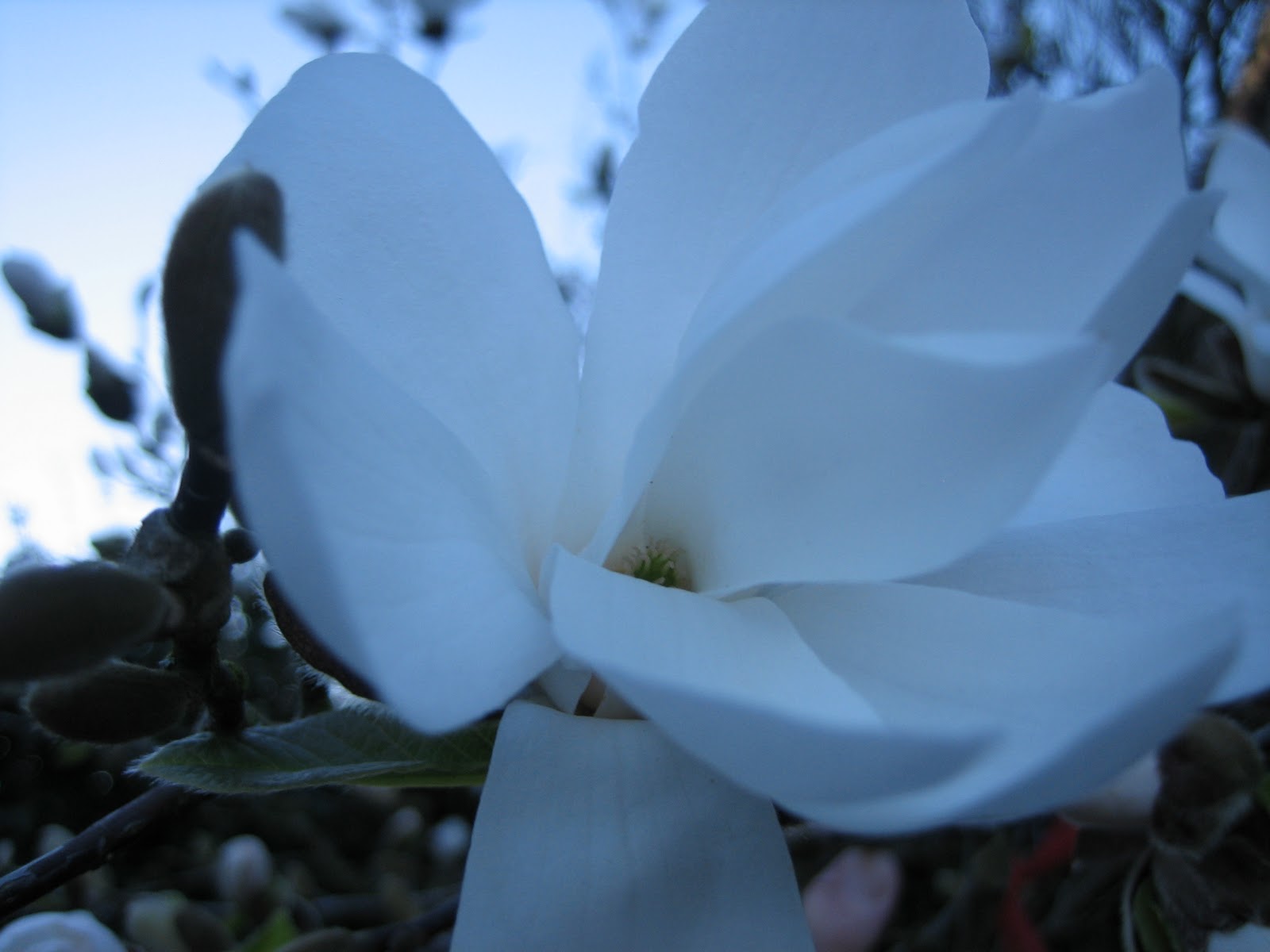
Out in the garden, the buds on the magnolia tree are showing the first signs of uncurling, the crocuses are poking through last year’s withered growth, and in the thick ivy that covers the fence between us and our neighbours, a pair of blackbirds have built a nest.

And the mind starts to unwind too. I start thinking beyond the confines of the winter house, the proverbial huddling round the fire. Spring cleaning the mind. I start thinking about jobs to do, clearing the garden, spring planting, days out with the kids, the bees up at the Farmshare, new projects, plans. Plenty to do.

Yep, it feels like spring is in the air.

Dawn Pics by JC

Thursday, 6 October 2011

The year in blogs

Scanning through the blogs over the last year was like fast forwarding through the seasons. As I write this we are enjoying an Indian Summer but reading through the blog reminded me that in just 11 weeks we will be stumbling around in the dark of the solstice. So my first pick is Charlotte's heartfelt Spring Ahoy where she celebrates the end of winter with some great photos - though I don't see what she has against parsnips!

Jon gets to heart of the craziness of global economics in Woolly Thinking when he finds that the 'wool' that he has just bought is in fact an oil derivative and manufactured in China - whilst farmers in Norfolk can't give the real stuff away.

One of the photos that has stuck in my mind is the completely whacky picture of Mark wielding an axe in I'll Give You Cuts, George Osborne. The post is both a reminder to get our heating sorted out for the coming winter and a flash back to the cuts that were so much in the news a year ago and which have now been overshadowed by the Eurozone crisis.

Pic: Sun through goat willow (MW)


Spring Ahoy!
Charlotte Du Cann
21 March 2011

Happy Spring equinox everyone and welcome to our spring week on the blog! We’ll be taking a look outside, exploring what’s coming up and celebrating the end of winter. Low Carbon cooks and growers will be checking out new green shoots and leaves, our wild earth reporters, toads and bees and the medicine of trees.

I’m really celebrating the end of winter, throwing out that hot water bottle and thermal gear and throwing open the windows. No more shivering! No more parsnips! There’s a fresh breeze out there this morning, primrose on the banks, blackbirds practising their arias, woodpeckers drumming the oak trees. Time to wake up early, stretch the body and walk out. In the Chinese five element system this is the season of wood and the warrior when the deep energies of winter start uncoiling and branching out. Its organ is the liver and its sense, the eyes.

So I’m sensing out the world beyond all those rigid squares and pixels on my computer screen, looking at the undulating earth shapes of trees, the way life is bursting out of wood everywhere and colours and scents flashing past: tortoiseshell butterfly wing, crimson bird feather, musty and sweet fragrance of gorse and box. The equinox is when the sun is straight ahead, day and night are balanced equally and the new astrological year begins with Aries the Ram. It’s a big planetary time (Did you see that gorgeous moon?)

Like most people my attention has been caught up in the cataclysmic events in Japan and it seems almost incorrect to be considering these small events in our own secure neighbourhoods. And yet the Japanese famously gather under cherry trees to welcome the Spring. And perhaps we could do no better than sit beneath the oriental blossom that graces our city streets and connect with them – the people of a fellow island nation. You can never underestimate the power of the heart.

My chief Spring medicine tree though would be the willow, specifically the goat willow, that old craggy fellow now bursting into gold along riverbanks and canals.

Willow is a big water tree and well-known for its properties to relax and make fluid everything that is crystallised and cramped within (the bark of white willow being the natural precursor to aspirin). It's hard to feel joyous and alive with a stiff and tense body. Hard to sit under this tree and not look up! and see the sunlight in its branches. When you do, listen and feel the thunderous buzz of bees, now coming out of hibernation and gathering pollen from trees everywhere.

Here are my fellow Transitioners, Mark, Nick and Eloise spring cleaning at our Sustainable Bungay Give and Take Day on Saturday. It’s time to shift and move and recycle old things on all levels! I’m not in the picture because I played truant and went to the woods for the first time in a long time, lay underneath hazel trees and checked out early violets and upcoming bluebells and watched a flock of goldfinches feeding on knapweed seeds that had been left uncut in a meadow. Afterwards I dug the garden and made myself an inner spring clean tea of cleavers, plantain, dandelion and angelica (all great for moving sluggish systems, especially the lymph).

On my way home I gathered a few wild leaves to toss into one of those robust and tangy salads Elena’s been talking about: bittercress and tansy, hawthorn and chickweed. Here are some green and growing tips from my garden. I’ll be taking some feisty alexander buds along to try out with my fellow Low Carbon Cooks too tomorrow. It’s a full-on week ahead, including Nicole Foss on Friday and the big TUC march on Saturday. I’ll be needing those greens!

Under the neighbourhood cherry plum; coastal gorse; Sustainable Bungay Give and Take crew and van; Japanese cherry at Castle Meadow, Norwich; garden tips of bronze fennel, salad burnet, lovage, hawthorn, dill, chickweed, tansy and cleavers

Saturday, 9 April 2011

Spring Scheming

One of my new resolutions for 2011 was to get more involved in some of the other Transition activities happening in Norwich.  Having greatly enjoyed a morning back in January planting hedges at the Norwich Farmshare site, I was really looking forward to last month's Spring Scheming at Inner Space.

After a recap of all the great things Transition Norwich has done so far, we started to think ahead and imagine a different kind of Norwich, a more resilient city, a greener, low-carbon city, a city rooted in community.  And we started to think about some of the things we could do to get us to that place.

I was really struck by the wealth of good ideas in the room, and also by the experience and enthusiasm of the people present.  Everyone had ideas, everyone wanted to work together to make them a reality and make a difference.  We talked about local shops, community energy, waste and transport cooperatives.  We talked about schools, cafe-conversations, sharing skills and tools.  We talked about food and about farms.

All good, strong, practical ideas.  We could have spent many engaging hours working through them, but we agreed to take a few ideas and work through them now here and now.

We split into groups, and the group on my table talked about community woodland and bees.  I'll come back to the community woodland idea in a future blog-post, but for now I'll talk about bees.

I've been fascinated by the progress of the Sustainable Bungay's Community Bees scheme, and really wanted to get something going in Norwich along those same lines.  Having spoken to Elena, I knew that the Norwich Farmshare were keen on including bees in the scheme, so it seemed like the perfect match.  We talked about beekeeping in our group, and everyone seemed very keen.  I agreed to take the lead on getting something up and running...

Confession time:  At that point, I knew virtually nothing about bees, other than what I'd say is common knowledge.  I couldn't even say with any certainty how bees actually made honey - I knew they made it out of nectar and kept it in wax combs, but that's not about how honey is made.  So, crash course time.  Norwich library has a number of books on beekeeping, including the excellent "Practical Manual of Beekeeping" shown above.  Fantastic, amazing book - I'm even more excited now that I'm reading through it.  I'm learning lots and have been in touch with the Bungay Bees team to see what we can learn from their exerience.  In our Spring Scheming discussion, we were clear that we wanted a community beekeeping scheme.

And to make it really work, it needs to be a community effort.  If you'd like to be part of setting up a Norwich Community Bees scheme, please do get in touch - leave a comment to this post, contact me via the Transition Norwich google groups, our Facebook page, via this blog's Who We Are page, or via Kerry on the Transition Norwich News piece.

Spring Scheming really was a catalyst for change, and I'm looking forward to seeing the fruits of the discussions over coming months and years.  Let's get buzzing!

Friday, 8 April 2011

Wild In The Kitchen

The Low Carbon Cookbook crew has been meeting each month now since last September. As well as cooking and sharing food, we’ve also been placing our attention on its ecological footprint, where the ingredients come from, how they are produced and how they get here. So far we’ve been gathering material and experience (including keeping a seasonal veg growers' diary) and in the coming months we’ll be starting to bring the book into shape. At the March meeting each of us spoke about a particular cooking oil we had researched. But not before dinner, which included a Spring salad of 24 wild, garden and fregan leaves, flowers and sprouts. And steamed alexanders.

“I’m sure you said you liked alexanders, Kerry.”
“Well, I wouldn’t say like…”
“Erik?”
“No, but I have brought some along,” said Erik.
We looked at the slim stalks and our noses turned up ever so slightly though, brave and worthy foragers that we are, we tried not to let it show. Then we burst out laughing. And put them on the stove.

It seemed no one was terribly keen on the taste of alexanders stalks. I know I wasn’t. And I hated to admit it because they are a very low carbon food growing all over my garden and everywhere on the East Anglian coast. Well, Richard Mabey must have a secret we didn’t have.

Alexanders (Smyrnium olusatrum) are in the carrot family, and quite similar to angelica (in East Anglia they are often called angelica, in fact, which confused me when I first came here). The true angelica (Angelica archangelica) flowers much later in July and August. Alexanders are just coming into flower now with their yellow umbel heads and extraordinary honey-scent.

The flowers will later give way to hard black aromatic seeds. I have dried and ground these and used them sparingly in potato or vegetable curry. Like the seeds of many other members of the carrot family (e.g. cumin, coriander, celery, anis) they are pungent - you can get a sense of the taste by crushing one and smelling it.

The alexanders tasted quite good in the end and we ate them like asparagus (though they'll never be asparagus). The key is to pick only the young slim stalks and don’t even think about it if they are in flower.

Well, I think Alexanders has conquered quite enough of the attention in this piece. There were other things going on that evening. Like chickweed omelette, and the sprouting broccoli and alfalfa with fenugreek – you were right Kerry, fenugreek sprouts are definitely to be eaten in moderation – my shirts and vests were still a reminder of my overindulgence three days later!!! (And an increase in clothes-washing could damage my low-carbon credentials).

You could feel the salad of wild and garden flowers and leaves with voilets, purslane, dandelion and cleavers entering right into your system and doing your body the whole world of Spring good. It seemed like the first time in ages I’d sat down to eat properly. And Bee’s home-produced plums were the best dessert.

Afterwards we spoke about our research on those oils we used in cooking and salads – sunflower, sesame, rapeseed, olive and hemp. There were some fascinating revelations. But that’s for the book.

As I write this (early morning) I can hear Charlotte downstairs preparing lunch. Her colleagues on the One World Column are coming down and afterwards we’re off to the community centre to show them how to use Blogger. And that nettle soup is going to get us all galvanised…

Pics: Dandelion, cleavers, nettle (for tea) and 24 wild and garden leaves; blooming alexanders; spring beauty aka miner's lettuce or wild purslane by Mark Watson

Friday, 25 March 2011

A Spring Tale

One sunny spring morning a posse of permaculture oriented Norwichians assembled at Norwich station for an exciting excursion to the foreign country of Essex. After a pleasant train journey we set off on our first mission to walk to the Apricot Centre. On the way we found some rather enticing banks of salad...


...tasty purslane and garlic mustard, the first foraging of the spring that on this beautiful day we took full advantage of...

At the Apricot Centre we had a very interesting tour around the permaculture designed fruit farm and we got to appreciate all of the emerging signs of spring.


Flowering redcurrant


Newly emerging leaves...


...shining like jewels in the spring sun


Furry caterpillar catkins


Gorgeous blossom...


...in beautiful juxtaposition with winter


and a successfully fruiting outdoor nectarine!

At the second project we visited - the peoples community garden in Ipswich - we had another lovely tour and then had a little nap...


...and did some concentrated digging to give a little bit back!


All in all a rather marvellous spring day!

Photos: All by me of the visit day

Thursday, 24 March 2011

Springing into Spring

The magnolia blossom is starting to come out in the garden; the first sign really that the warmer weather has hit the garden. The bees are starting to buzz around the blossom, and the birds are starting to wake me up early in the morning.

The warmer weather means G & A get to spend more of their time outside, which is great after a cold winter cooped up in the house.  There's only so much CBeebies you can cope with, and it feels like they're uncurling along with the leaves.  So the first really warm weekend means that the trampoline goes up in the garden and they spend their time after school bouncing around.

Trampolining is said to be very good for the logical, mathematical part of the brain (something to do with the balance between your eyes, ears and the core of your body) but to me they look just like March hares bouncing and dancing all over the place.

Wednesday, 23 March 2011

Bumblebees, Honeybees, Archangels, Box

Last Sunday when the sun came out after what seemed like a winter of aeons, I looked out of the window at the garden, saw all the work that needed doing and despite the good weather an enormous lethargy come over me. I wanted to crawl back into bed with a book!

But instead I decided to take a look at what was out there and grabbed the camera on my way.

The first thing I found was a group of Red Deadnettles (or Archangels) all in bloom in the long sere grass, which we leave unmowed for the insects. Bending down to take a photograph I heard a buzz and out flew this bumblebee, followed shortly by a second.

And something stirred in my dormant self: Isn't this Spring? Aren’t I part of Bungay Community Bees? Haven’t I just been reading reading the newly published United Nations Environment Programme report, Global Honey Bee Colony Disorder and Other Threats to Insect Pollinators, which states a clear need for the presence of many more wildflowers? Am I not preparing a series of wildflower bee walks this year? Wake up Watson!

This is from p.5 of the UNEP report:
"Bumblebees are highly social, like honeybees, but with smaller, less structured nests, that can consist of up to 1 000 bees. Bumblebee colonies are annual; the entire colony dies out each year and leaves only mated queens to hibernate through winter. The queen will start a new colony in spring. Bumblebees pollinate tomatoes, eggplants, peppers, raspberries, blackberries, strawberries, blueberries, and cranberries, just to name a few. Bumblebees are the only pollinators of potato flowers worldwide."

Red Deadnettles are a native wildflower and a major source of pollen for bumblebees during March and April as they wake up after the winter. They are a modest plant and I didn't take much notice of them at first, but the more I look the more beautiful they become.

I still remember the days before I gave any plants, let alone wild ones, any thought at all, beyond their being pretty or tasty. Then in the 90s I started visiting every kind of territory from waste grounds to canal and riverbanks and seashores getting to know our native wild plants. I became totally hooked.

It's only since becoming involved with Bungay Community Bees though, that I've been paying more attention to the relationship between flowers and bees. And realising that what started out as a personal interest is really about being connected with the web of life.

I'll be talking more about wildflowers and bees on the blog over the coming months. Right now I'm off to track a bee walk through the market town of Beccles with fellow Transitioners Charlotte and Netta. You might like to take a look at this great national wild flower project, River of Flowers.

Pics: Spring Morning March 2011; Garden Bumblebee (Bombus hortorum) on Red Archangel; Honeybee on Box Tree flowers

Tuesday, 22 March 2011

A 'Fine Tilth'

The sun is warming the soil and after months of inactivity there are loads of things to get done in the garden and seeds to be planted. Somehow it always catches me unprepared but this year I have achieved that elusive ‘fine tilth’ that the gardening books and seed packets exhort us to create. The problem with gardening on the clay soils of East Anglia is that the soil is often either squidgy mud that sticks to your boots or is baked into lumps and impossible to turn into a tilth of any sort! So how did those old Norfolk ‘bors’ always achieve a fine tilth when sowing their immaculate rows of vegetables?

I guess that growing their own food was an economic necessity so they would have made gardening a number one priority and been out there digging when the conditions were right – unlike me who fits my gardening in around other activities and just hopes to hit lucky when it is time to sow seeds.

Well it worked this time but of course not everything is perfect in the garden – can we have some rain please?

The picture above is a Marsh Marigold in the pond that is the courting ground for many frogs and toads at present - I love the frog chorus late at night!

Buds appearing on my prized Morello Cherry - how many pies this year?

Cucumber seedlings bursting forth - and finally the 'fine tilth' - with onion sets protected from the birds. The picture at the top is of a peach in my greenhouse.

Monday, 21 March 2011

Spring Ahoy!

Happy Spring equinox everyone and welcome to our spring week on the blog! We’ll be taking a look outside, exploring what’s coming up and celebrating the end of winter. Low Carbon cooks and growers will be checking out new green shoots and leaves, our wild earth reporters, toads and bees and the medicine of trees.

I’m really celebrating the end of winter, throwing out that hot water bottle and thermal gear and throwing open the windows. No more shivering! No more parsnips! There’s a fresh breeze out there this morning, primrose on the banks, blackbirds practising their arias, woodpeckers drumming the oak trees. Time to wake up early, stretch the body and walk out. In the Chinese five element system this is the season of wood and the warrior when the deep energies of winter start uncoiling and branching out. Its organ is the liver and its sense, the eyes.

So I’m sensing out the world beyond all those rigid squares and pixels on my computer screen, looking at the undulating earth shapes of trees, the way life is bursting out of wood everywhere and colours and scents flashing past: tortoiseshell butterfly wing, crimson bird feather, musty and sweet fragrance of gorse and box. The equinox is when the sun is straight ahead, day and night are balanced equally and the new astrological year begins with Aries the Ram. It’s a big planetary time (Did you see that gorgeous moon?)

Like most people my attention has been caught up in the cataclysmic events in Japan and it seems almost incorrect to be considering these small events in our own secure neighbourhoods. And yet the Japanese famously gather under cherry trees to welcome the Spring. And perhaps we could do no better than sit beneath the oriental blossom that graces our city streets and connect with them – the people of a fellow island nation. You can never underestimate the power of the heart.

My chief Spring medicine tree though would be the willow, specifically the goat willow, that old craggy fellow now bursting into gold along riverbanks and canals.

Willow is a big water tree and well-known for its properties to relax and make fluid everything that is crystallised and cramped within (the bark of white willow being the natural precursor to aspirin). It's hard to feel joyous and alive with a stiff and tense body. Hard to sit under this tree and not look up! and see the sunlight in its branches. When you do, listen and feel the thunderous buzz of bees, now coming out of hibernation and gathering pollen from trees everywhere.

Here are my fellow Transitioners, Mark, Nick and Eloise spring cleaning at our Sustainable Bungay Give and Take Day on Saturday. It’s time to shift and move and recycle old things on all levels! I’m not in the picture because I played truant and went to the woods for the first time in a long time, lay underneath hazel trees and checked out early violets and upcoming bluebells and watched a flock of goldfinches feeding on knapweed seeds that had been left uncut in a meadow. Afterwards I dug the garden and made myself an inner spring clean tea of cleavers, plantain, dandelion and angelica (all great for moving sluggish systems, especially the lymph).

On my way home I gathered a few wild leaves to toss into one of those robust and tangy salads Elena’s been talking about: bittercress and tansy, hawthorn and chickweed. Here are some green and growing tips from my garden. I’ll be taking some feisty alexander buds along to try out with my fellow Low Carbon Cooks too tomorrow. It’s a full-on week ahead, including Nicole Foss on Friday and the big TUC march on Saturday. I’ll be needing those greens!

Under the neighbourhood cherry plum; coastal gorse; Sustainable Bungay Give and Take crew and van; Japanese cherry at Castle Meadow, Norwich; garden tips of bronze fennel, salad burnet, lovage, hawthorn, dill, chickweed, tansy and cleavers