Showing posts sorted by relevance for query low carbon cat. Sort by date Show all posts

Friday, 30 March 2012

Some Notes on Tracks and Edges

At the edge where we encounter another human being, we discover for ourselves what it is to have to break down a little... Cat Lupton
I am standing on the platform at Lowestoft Station. It is early evening. April 2010. And May. And June. In under an hour I will have traversed the Broads on the two-coach train, past the swans and waterways, past the big sugar factory, past the wide green and gold vistas and the boatyards. And will have arrived in Norwich where I am on my way to a carbon conversations course.

I have loved these journeys, made possible as they have been by a bus service connecting Lowestoft to where I live further down the coast. This will not last. The bus route which has run for 26 years will be reduced then scrapped altogether in the Autumn. No more connecting night buses. The carbon conversations will finish.

I am unsure about the carbon conversations, a 6-session course over twelve weeks aimed at helping people reduce personal and household carbon use and emissions using a non-confrontational approach. I often feel like I’m at school disrupting more well-behaved pupils in a quiet and serious class, and prefer the more creative, deeper, experimental nature of our Stranger’s Circle meetings where we bring our household energy bills to show each other, take a good look at the industrial food system, have difficult conversations about transport use. Where we're making it up as we go along. Where there's more of an edge.

Down the line (sic) I see the value in both approaches, and it was through both the Strangers’ Circle year and carbon conversations that the Low Carbon Cookbook group was born, which meets monthly to explore low carbon ways of buying, growing and preparing food (and write a book about it – always the hardest part!)

But back to the easternmost station in England. I have no such ambivalence about the journeys themselves (carbon-footprint-calculated though they were). Having downshifted in a major way over the past decade from someone who travelled all over the place in bus, car, train and plane, I rarely travel beyond East Anglia now. And I’ve learned to become less spoilt, less desirous of more ‘glamourous’ destinations, more present to where I am.

That platform for instance. If you walked past where the small train stops, where no one goes, in June and July of 2010, you would find, there at the edge, the most extraordinary outbursting of native wildflowers and medicine plants, all Growing Up Through the Cracks: midsummer Mugwort, St. John’s Wort, Plantain and Yarrow, Buddleia and Wild Carrot. All shining in the early evening light. The plant the Chinese use for moxa in acupuncture, the ‘sunshine herb’ dispeller of demons and nightmares, the menders of myriad wounds, the butterfly bush and the ancestor of one of our favourite vegetables.

It is so easy to hate: those who flail the countryside hedgerows and pour poison on the poppies by the junction of the main road. The stupidity of councils and people obsessed by tidiness. The compulsion to keep anything that smacks of ‘wild’ or ‘untamed’ out or under strict control.

Those rude, healthy, resilient plants. How dare they push through those cracks in the polite concrete and tarmac. In the end they were not left alone, beautiful and shining on that part of the platform where hardly anyone went, but removed in the manner of all ‘weeds’ in the name of civic orderliness. They still make their appearance further over on the tracks and by the fences though it’s not quite the same.

And anyone who loves the 'wastegrounds' and the natural world will know how difficult it is to live with the feelings that these things bring up. In my pre-Transition years I was frequently overwhelmed by them. Now after all the meetings and events, carbon conversations and circles, food and plant swaps, wild plant and foraging walks and experiments in downshifting, I still feel the same about the destruction of wildflowers and their habitats, but I'm tougher. I'm taking people out to show them where the 'weeds' grow, what their properties are, how they feed bees, how they heal us and how beautiful they are in their own right, and curating a plant medicine bed with related events.

Not that Transition has been either an easy ride or a magic pill. Learning to temper one's individualism to relate to others, even include them at all and not lose yourself, can be a struggle. There's the frequent temptation to cut off when that carbon conversation is just too, too... annoying. Boring. Left brain. Whatever. Or to simply go along with things that don't feel right because challenging them would make you feel like you WERE THE ONLY ONE IN THE WORLD WHO FELT LIKE THAT and EVERYONE would look at you like the OUTSIDER YOU REALLY ARE and you would be EXILED.

But engaging in that struggle, difficult, edgy though it is, can bring a meaning and sense to life which no amount of comfort or opulence will ever bring.

And the quote at the top of this piece? It's from an extraordinary post, Meeting Your Edge, by Cat Lupton, writing this week on The Place Between Stories about grappling with individuality and community after an introduction to permaculture course.

It was reading Cat's post that gave me pause to consider these things.

Pics: Mugwort Lowestoft railway station 2010; on the train to Norwich, Lowestoft, 2010; Midsummer wildflowers, Lowestoft, 2010; Plants for Life talk at Bungay Library community garden, 2012

Friday, 5 October 2012

Retro blog #5: I never promised you a rose garden

As well as our topic and themes weeks on This Low Carbon Life we also wrote in three-day (originally five-day) shifts. It gave us a chance to focus on our "home" subjects and to see the breadth of each others' experiences and to respond (the great advantages of contributing to a community blog, as opposed to a solo one, is  knowing you are not on your own). These days allowed us to stretch our wings as writers and photographers and appreciate our different styles and takes on life.

Where we met was in our celebration of plants, people and places. So whether this was Jon talking about bees, planting an oak or finding a city fox, John reporting on his vegetable garden in Little Melton, or rescuing toads on Norfolk roads, Elena on the wild life at Norwich FarmShare or Helen celebrating the artist quarter of Magdalen Street, place making forms the heart of this blog. You could say it created a connection between us, as well as grounding us within our Transition stories. Climate change and "community" can be abstract things unless fully engaged with. A feeling, kinetic and imaginative connection to our neighbourhood and its inhabitants (not just human) help us all make ourselves at home in a rocky and restless time.

One of our most eloquent PPP reporters has been Mark, who manages to weave a love of the wild and medicine plants with an unswerving generosity towards fellow Transitoners. Funny, warm, self-depracating, as well as a great record of community events and meetings, his blogs regularly track the comings and goings of plants, particularly this year where he has curated a Transition medicine bed at Bungay Library Community Garden. I really enjoyed the winter (look still no heating!) Meanwhile let's talk about the weather, the springtime foraging epic Conquering Alexanders and the mix of midsummer meetings in  Life is roses... sometimes.

We are told that life should be a paradise, when we see all about us a wrecked and polluted kingdom. We depend utterly on the plants for our food and air and shelter, yet we are taught to treat them as mere commodities. Somehow we have to restore our relationship with the planet, with each other and get back on track.

Sometimes we find help in the most surprising places . . . .

Magdalen Celebration crew, 2011 from Shift Together - Working Title (helenofnorwich); Mark under neighbourhood cherry from Wallking with Weeds (Charlotte Du Cann)

Some Notes on Tracks and Edges by Mark Watson
31 March 2012
At the edge where we encounter another human being, we discover for ourselves what it is to have to break down a little... Cat Lupton

I am standing on the platform at Lowestoft Station. It is early evening. April 2010. And May. And June. In under an hour I will have traversed the Broads on the two-coach train, past the swans and waterways, past the big sugar factory, past the wide green and gold vistas and the boatyards. And will have arrived in Norwich where I am on my way to a carbon conversations course.

I have loved these journeys, made possible as they have been by a bus service connecting Lowestoft to where I live further down the coast. This will not last. The bus route which has run for 26 years will be reduced then scrapped altogether in the Autumn. No more connecting night buses. The carbon conversations will finish.

I am unsure about the carbon conversations, a 6-session course over twelve weeks aimed at helping people reduce personal and household carbon use and emissions using a non-confrontational approach. I often feel like I’m at school disrupting more well-behaved pupils in a quiet and serious class, and prefer the more creative, deeper, experimental nature of our Stranger’s Circle meetings where we bring our household energy bills to show each other, take a good look at the industrial food system, have difficult conversations about transport use. Where we're making it up as we go along. Where there's more of an edge.

Down the line (sic) I see the value in both approaches, and it was through both the Strangers’ Circle year and carbon conversations that the Low Carbon Cookbook group was born, which meets monthly to explore low carbon ways of buying, growing and preparing food (and write a book about it – always the hardest part!)

But back to the easternmost station in England. I have no such ambivalence about the journeys themselves (carbon-footprint-calculated though they were). Having downshifted in a major way over the past decade from someone who travelled all over the place in bus, car, train and plane, I rarely travel beyond East Anglia now. And I’ve learned to become less spoilt, less desirous of more ‘glamourous’ destinations, more present to where I am.

That platform for instance. If you walked past where the small train stops, where no one goes, in June and July of 2010, you would find, there at the edge, the most extraordinary outbursting of native wildflowers and medicine plants, all Growing Up Through the Cracks: midsummer Mugwort, St. John’s Wort, Plantain and Yarrow, Buddleia and Wild Carrot. All shining in the early evening light. The plant the Chinese use for moxa in acupuncture, the ‘sunshine herb’ dispeller of demons and nightmares, the menders of myriad wounds, the butterfly bush and the ancestor of one of our favourite vegetables.

It is so easy to hate: those who flail the countryside hedgerows and pour poison on the poppies by the junction of the main road. The stupidity of councils and people obsessed by tidiness. The compulsion to keep anything that smacks of ‘wild’ or ‘untamed’ out or under strict control.

Those rude, healthy, resilient plants. How dare they push through those cracks in the polite concrete and tarmac. In the end they were not left alone, beautiful and shining on that part of the platform where hardly anyone went, but removed in the manner of all ‘weeds’ in the name of civic orderliness. They still make their appearance further over on the tracks and by the fences though it’s not quite the same.

And anyone who loves the 'wastegrounds' and the natural world will know how difficult it is to live with the feelings that these things bring up. In my pre-Transition years I was frequently overwhelmed by them. Now after all the meetings and events, carbon conversations and circles, food and plant swaps, wild plant and foraging walks and experiments in downshifting, I still feel the same about the destruction of wildflowers and their habitats, but I'm tougher. I'm taking people out to show them where the 'weeds' grow, what their properties are, how they feed bees, how they heal us and how beautiful they are in their own right, and curating a plant medicine bed with related events.

Not that Transition has been either an easy ride or a magic pill. Learning to temper one's individualism to relate to others, even include them at all and not lose yourself, can be a struggle. There's the frequent temptation to cut off when that carbon conversation is just too, too... annoying. Boring. Left brain. Whatever. Or to simply go along with things that don't feel right because challenging them would make you feel like you WERE THE ONLY ONE IN THE WORLD WHO FELT LIKE THAT and EVERYONE would look at you like the OUTSIDER YOU REALLY ARE and you would be EXILED.

But engaging in that struggle, difficult, edgy though it is, can bring a meaning and sense to life which no amount of comfort or opulence will ever bring.

And the quote at the top of this piece? It's from an extraordinary post, Meeting Your Edge, by Cat Lupton, writing this week on The Place Between Stories about grappling with individuality and community after an introduction to permaculture course.

It was reading Cat's post that gave me pause to consider these things.

Pics: Mugwort Lowestoft railway station 2010; on the train to Norwich, Lowestoft, 2010; Midsummer wildflowers, Lowestoft, 2010; Plants for Life talk at Bungay Library community garden, 2012

Monday, 14 June 2010

Transition Conference, Low Carbon Cat and 14 Degrees

This weekend Transitioners from all over the country have been meeting up in Devon for the yearly Transition Conference. Charlotte, Tully and Christine have all been in the action and it finishes at lunchtime today, so this week (from tomorrow) we’ll have posts from the West. There should also be a guest post or two from other initiatives, so do stay tuned.

I stayed at home holding the fort and feeding the birds and the cat - although the cat is very much feeding herself on an extremely low carbon diet with distance travelled counted in food yards. I won’t go into the details, only to say that she’s not vegetarian. Fortunately, though, she has no interest in birds and her food source is not an endangered species here in the rural outposts.

Oh, and can someone do something about the weather, please? I know it’s different from the climate, which we are all trying to do something about. But the thermometer read 14 degrees Celsius in the middle of the day last Thursday after the mists had rolled in from the sea the night before. And I was wearing a jumper. Too much!

Pic: Last Train Arrives at Lowestoft after Carbon Conversations - the mist rolling in

Friday, 2 July 2010

Wild In The Summer Garden - Reptiles (and Amphibians?)


Calling John from Transition Circle Hethersett of toad-saving fame! Do you know who this little creature I found amongst the pots the other day might be? Does someone else know? I've seen them occasionally disappear into the dark damp green through the years, always this size, which as you see is very small. This is the first time I've been able to pick one up and take a photo. Young newt? Young lizard?

A few months ago I described this same creature to Erik (also in TC Hethersett), who'd dug up an unknown hibernating creature in his garden. Somehow in that exchange we discovered we both spoke German, but I was left none the wiser as Erik told me that being a microbiologist didn't necessarily mean you could identify amphibians. It could also have been my description of course.

The other day we arrived home to find this grass snake on the path. Calm and collected as you like, he/she flicked his/her tongue and stayed right there whilst I fumbled for the camera and took several pictures. Eventually we had to move forward to get past and only then did the snake move, slowly, into the long grass.

The grass snakes live in our compost heap, which means that it's not a compost heap for quite a lot of the year. I've found up to seven of them at once, all different sizes. It's really exciting to lift up the old carpet and see them curled up absorbing the heat. This year they are sharing with a common lizard, ants and other insects.

Oh, and you know I was talking about
our low carbon cat a few weeks ago. Well, she continues to feed herself. First she brings her catch to show us. Then at some point she has her dinner. And she rarely leaves anything on her plate.

Pics: As yet unidentified creature on my hand; Grass snake on the path; the path to the compost heap; low carbon cat food; the compost heap snake and lizard home all by Mark Watson June/July 2010

Saturday, 5 November 2011

Occupying the House with the Cat

“I just read you were alone with the cat and thought I’d give you a ring,” said Josiah on the phone. Nick had picked Charlotte up in the afternoon and they’d gone to Occupy Norwich for the night.

“Ah the value of twitter,” I laughed. “I didn’t sound sorry for myself, did I? It was very tongue in cheek. The cat’s gone out now too!”

It is ten to seven in the morning and I am typing this in bed. Outside it’s raining slightly, there’s a light mist on the fields in the grey dawn and it suddenly feels like November. The cat has come in from the night, bounded around the house, washed herself and jumped from the bedside table onto me knocking over pens and pencils and making it as hard as she can for me to get to the keyboard.
So that’s where I am. I have a list in front of me of the things I’ve been considering all week for these posts but it's the Occupy movement that keeps occupying the space! Two pieces really stuck in my mind, one about confronting the demand to always have to have demands; and the other Erik Curren's on how it's not just the bankers we need to be looking at but also Big Oil.
In a few hours Charlotte will be back from her night on the streets of Norwich. She’s coming with Tom, who’s interviewing us about This Low Carbon Life and Transition Norwich communications as part of a short film he’s making for the 3rd birthday celebrations on the 15th of this month. And I've got stage (or film) fright.
So I need to get the house in order and myself prepared. I’ll let you know how it goes in Part 2 later...

Part 2 Later
Well, that wasn't so bad. Tom arrived with Charlotte and his two small daughters and he filmed us talking about communications and the blog. In fact it was really good fun. Tom's a sympathetic director who told me my performance nerves were a good sign - it meant I cared about what I was doing - and who really lets you be yourself. Although I am slightly worried that second cup of coffee will have made me come across like a mad professor on acid.
Meanwhile the girls and the cat happily occupied the bed together, whilst Charlotte and I took it in turns to read them stories so Tom could film.
Haven't spoken with Charlotte yet about what went on at Occupy Norwich last night. I'm busy finishing this post and she is attending to the Social Reporting project. But she'll be writing about it herself next week, either on the One World Column or for This Low Carbon Life's Transition Themes week. Watch these spaces!

I forgot to take photos of our filming session with Tom, damn! But here's Nick and Charlotte by the garden tent just before they set off yesterday for a more concrete sort of tent experience!

Wednesday, 22 September 2010

One Planet Community Kitchen 1 - Deconstructing the Dish

Last night we had our first One Planet Community Kitchen meeting at the Greenhouse in Bethel Street. We met to discuss a new Transition Norwich project, the Low Carbon Cookbook. Twelve people came and we put our heads, hearts and hands together. Josiah shared his broad experience and knowledge of co-ops and laid out their basic structure and tenets. We introduced ourselves and the dish we brought with us to share.

The Kitchen is a regional hub that aims to start up food and arts projects in different Transition initiatives. All the projects will share three aims: 1) to work creatively as a co-operative group 2) to bring ecological awareness to the food we eat 3) to map local food patterns.

In the next few months we’ll be writing on the blog about some of the aims of the Kitchen and showcasing our work. Ways of calculating an ecological footprint for food – looking at carbon emissions, as well as other greenhouse gases, in transport, production and processing. We’ll be considering waste, packaging, the use of water. Several people who came were from the four Transition circles and were Carbon Conversation facilitators; Erik ran the original One Planet group at UEA.

We’ll be focusing on the Transition Food Patterns of Norwich and its hinterlands in the way we began in our Transition Food Patterns Fortnight. Building up a list of producers, talking to people, visiting city allotments and food projects. We’ll be writing information boxes that show why engaging in local market-diversity (as opposed to supermarket monopoly) creates resilient community, what exactly organic certification means. And we’ll be cooking! Trying out recipes that are sustainable, intelligent, delicious, meaningful. Bring a dish to share dishes that everyone can eat.

Last night we talked about many things - how to go forward as a co-op, consensus decision making, bread and bees. Tom talked about how low-carbon food needs to be vibrant and aesthetic, Mediterranean in its temperament. Christine brought the constriction of diets into play. Grower-cooks, Jo and Janet discussed what to do with damson and courgette gluts, Kerry with green tomatoes. Gemma talked miso soup with Donegal seaweed from the Ripple Food Coop she founded in Ipswich. Josiah talked venison sausages supplied by someone he once knew who was licensed to shoot deer in Thetford Forest. Mark talked about a local “omlit”with veg box onions and Cara potatoes we had just dug from the garden. Elena talked honey from the Fat Cat pub and showed us (and gave us to taste) a divine way with runner beans, delicately shredded and flavoured with home-grown chili and brown mustard seeds (didn’t mustard once grow commercially in Norfolk?). Erik showed us a circle that began and ended in compost, a cycle that included seed swaps and germination, weather and parties and snails. The earth is not linear. It goes round and makes extraordinary connections with all its constituent parts. How do we create a book that is non-linear?

The Deconstruct the Dish exercise kickstarts this creative process by putting attention on the material, engaging the imagination, our ability to cross-reference and make different pathways, asking ourselves questions. This is how it goes: everyone sits down at a table with a large sheet of paper (two people to one piece). You draw a circle and put all the ingredients of the dish inside. Then you take each ingredient and write everything you know about it alongside. You ask yourself and/or your drawing partner: Where did I buy this? Which land did it come from? How did it get here? What people were involved? What’s my relationship with them? When did I first eat this dish? Then you share what you discovered with everyone in the room.

I brought fava, a yellow split-pea dish I had once eaten when I was 20 years old. I had arrived on the Greek island before Easter and there was no food to be had in the taverna. Out of nowhere there appeared this dish cooked by the island’s poorest family. They brought it to us shyly, a steaming golden pile, adorned with eggs and olives and a loaf of bread that was baked in the side of the mountain. We devoured it happily. It brings good memories this dish and reminds me of the key to all good meals and creative works - generosity and essential ingredients.

The island was one of the most sustainable places I have ever been. There were no cars, few houses had electricity and everyone drew water from wells and a communal spring. The diet was rough and plain, mostly vegetarian with occasional meat and fish - Easter kid, snails, sea urchins, octopus and bream. The olive oil and thyme honey were the best I have ever tasted. In my picture I drew eggs from Sarah’s roadside stall, parsley grown from Erik’s seeds at the Seed Swap, olives from a Palestinian women’s coop bought at Norwich’s Peace Camp. It was food with meaning, with roots that sank deep in the earth. The industrial food system has no such connection, neither with place nor people, nor our heart’s memory. So to eat sustainably we have to remake those links. That’s one of the main purposes of the Kitchen. Last night some smart and sassy cooks and some essential ingredients came together. Our first project, TN’s Low Carbon Cookbook finally got on the stove . . .


Miso soup by Gemma (Transition Ipswich, Sustain, Ripple Food Coop ) and Green Beans by Elena (TN, CSA, Strangers' Circle). Josiah and Charlotte planning One Planet Community Kitchen at the Greenhouse.; banner - me describing fava; Mark's Cara potatoes; Venison and Puy Lentil Stew by Josiah (Sustainable Bungay, Provenance, East Anglia Food Link). Gemma and Jo listening to Tom from the Greenhouse; Apple and Green Tomato Pie by Kerry (Transition Norwich, Otesha, Greenhouse, Green Grocers)

Many thanks to Tom at The Greenhouse for making us so welcome.

Thursday, 4 February 2010

The Low Carbon Kitchen

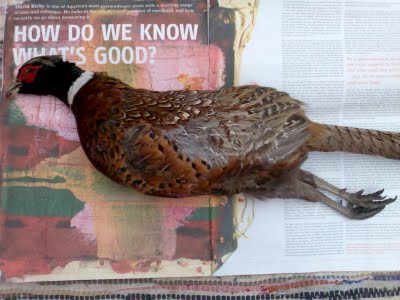
I found the pheasant on the road coming back from a Transition day in a primary school in Framlingham. He was a beautiful bird without a mark on him, his coppery-flecked feathers glowing in the almost dusk. I carried him back to the car. "What are you going to do with that?" asked Mark. "We're going to eat him," I said. "It's a gift."

So he hung up in my larder for three days, after which I cut him down, plucked and drew him and cooked his body in wine flavoured with thyme and bay. I gave the neck and liver to the cat and buried his feathers, feet and head under the hawthorn hedge.

The dish (and the soup next day) were divine.

You might not think this is a story. Roadkill - no big deal. Except for me it was because I hadn't eaten any meat for 10 years.

The decision had taken me one second to make. It was as quick as the moment I picked up the cock pheasant and knew I had to take him home. I never changed my mind about eating animals. Once you see it you can't unsee it. It's like the aha Rob Hopkins calls The End of Surburbia moment, the peak oil moment, when suddenly without knowing it you find yourself in Transition.

Those kinds of decisions are made by the spirit which is faster than the speed of light. Our physical forms however are slower. It took six months for my body to adjust to the mostly vegan diet I now eat, to be able to absorb plants after a lifetime of eating fish and meat and cheese. It took my emotional body time to let go of the moreishness of sugar, palm oil, bananas. My mind to make the switch to organic and locally farmed food.

To completely change the way I ate I needed a territory to do it in. When I moved to Suffolk I could engage in the kinds of relationships that Tully talked about in his blog last week, a mix of wholefood shops and corner stores, roadside stalls and farm shops and a weekly box from Malcolm and Eileen in Darsham. It’s a practice I began two years ago when I gave up going to supermarkets.

If we’re going to seriously get into low carbon cooking, into downshift cuisine we’ve got to get smart on a lot of things. Some of those we touched on in our last Strangers’ Transition Circle on Food. One of these is energy. How much energy does it take to cook a meal?

The Monitor says that I am using 375 watts every time I go near my kettle, that a piece of toast is costing Mark 5p a slice and when he starts to bake his sourdough it hits 1KW and rising. Every time I’ve gone into the kitchen this week the Monitor is there before me.
"Turn that light off," yells Mark "We’re up to 677!
"Mark, I can’t cook in the dark!" I yell back. The kitchen lights, all unsustainable six of them went on strike and blew the circuit. Now we’re scrabbling about with a lamp and the corridor low-energy glow.

Downstairs letting the cat out of the door to go hunting on a frosty star-filled night, the Monitor glows like a blue police lamp in the living room darkness. She’s achieved her favourite result of Zero (until the fridge powers up that is). The temperature of the room registers 7 degrees. Little boxes on the display are stacked up: one box for night, two boxes for day, four boxes for the evening. Like one of those Christmas presents you got excited about when you were small however the Monitor (on loan from the Bungay library) is losing her appeal.

Because the truth is we can’t live on figures and facts like these. The data can make us aware of energy use in the kitchen - our hobs and ovens and kettles but they don’t feed our souls and our archaic hunter-gatherer bodies that resonate to the touch of wild creatures, roots and seeds and fruit and rain. They don’t bring us sweet memories or the tastes and textures of life. And to really change our habits, so that climate change and peak oil don’t ravage our lives and everyone else's we’ve got to make some other kinds of moves. The ones that scientists and rationalists might dismiss as poetic.

To go back through that small door to find the earth and all its riches, we’ve got to get creative and change what we value, bringing our immense knowledge of the world’s larder to bear in how we cook - street food and peasant food from Mexico, Morocco, India, China, Greece – using all the ingredients we have at hand, in time, in season.

The humble tastes of stored apples and January king cabbage, the pungency of winter purslane and mizuna, the richness of parsnip and swedes.

The taste of the territory in which we find ourselves.

In the end what matters is the connection. Once you find that you can let all that high-carbon food buying go - the swanky restaurant, the exotic fruit, disappearing cod, all those special treats and fancies and comforts that exploit the world and all its peoples. All these are substitutes for creaturehood - the relationship with the place that keeps us alive and connected. You can't have this relationship with industrialised food. It's an earth thing. A gift we find in our hands at the end of the day.

Cock Pheasant just before plucking on last year’s Poetry Paper
Collecting the box from Malcolm on a snowy day
Kitchen window with local garlic and Brussel sprouts

Thursday, 8 September 2011

Welsh Sheep in the Suffolk Cottage Loft

When Chris decided to lead this week of posts on buildings in transition, my primary reason for signing up was because there were 18 rolls of Welsh Black Mountain sheepswool loft insulation lining up in the hall upstairs and crowding out the spare room. And looking like they might be there for a while longer yet.

So I thought if I have to write about it I’ll make sure we get them up into the loft. Which is what we did yesterday afternoon.

I live with Charlotte in a rented late 19th century tied Suffolk cottage, originally a two-up-two-down with an upstairs sunroom and a conservatory added a decade ago.

There is double glazing on the windows, oil-fired central heating and a woodburning stove in the downstairs front room. Until yesterday there were a few inches of fibreglass insulation in the loft. There is no cavity wall insulation - the house is too old (1884).

Before I get to the laying of the wool (sounds almost like a ceremony, doesn’t it? The Laying of the Wool) I’d like to give some context.

I first got involved with Transition Towns in 2008, and experienced more than one Peak Oil moment. Then in 2009 several of us in Transition Norwich decided to reduce our personal carbon emissions to half the national average over the coming year. Using a selection of carbon calculators we decided on a figure of 4,500 tonnes. Each month we would meet to examine a different aspect of our energy consumption and how we could practically reduce it: household (we brought our bills to show each other), transport (car, train and plane), food, waste and ‘stuff’ (including clothes).

I’ve written before on this blog how this year of living differently radically altered my approach to energy use. First by paying attention to what I was using. And secondly doing it as part of a committed group working together.

The first thing we did in our house was decide on a drastic reduction of our oil-powered central heating use. This was September. The house gets cold in the winter and we watched the thermostat steadily drop after November down to single figures, whilst we piled on more and more layers of clothes. We used the log fire several times a week.

The winter of 2009/10 was cold and it was quite tough. That’s where being part of TN-2’s Strangers’ Circle (so named because it was made up of Transition Norwich people living outside the city) made all the difference. It kept our spirits up. There were those meetings to look forward to.

By last Winter the year was up and the group no longer meeting. Charlotte and I reduced our central heating use even more and it was easier. I think we must have toughened up as our bodies got used to colder conditions. Overheated buildings both private and public began to feel stuffy and airless to me. I also began to cut logs from local dead elms for the log fire. It would be nice to find a low carbon, low cost way of getting the thermostat into double figures, though.

Back to this year and the Welsh Black Mountain sheepswool. At July's All Under One Roof environmental day in Bungay, we picked up an application form for the council's Greener Homes DIY scheme and put in our "wish list" of some sheepswool for the loft and a second rainwater butt. Under the scheme insulation (hemp, sheep's wool or recycled plastic) and other items such as draught excluders were free of charge though you had to pick them up and install them yourself.

And this is where Eloise and the Old Post Office Van came in. Eloise picked Charlotte up in Bungay on the 18th August and they packed in the water butt and the 18 rolls of insulation and brought them here to Reydon.

It took about an hour to roll out the insulation in the (empty) loft, which went straight on top of the old fibreglass stuff. It was much easier to do than I had imagined (I'd been thinking complicated scenarios with builders). And Lesley from Sustainable Bungay had recently done hers and said it wasn't difficult.

Warning: Proper masks of the correct grade should be worn over the face (handkerchiefs will not do, Lesley told me) - we got ours from the local ironmongers, they cost about £1 each. This is not because of the sheepswool, which is perfectly safe, but because the old fibreglass insulation is not good to breathe in.

Now all we have to do is wait until winter and see if our house's woolly hat will keep us warmer (though the cat preferred the pre-loft situation).
Back of the cottage; chopping wood; insulation in the corridor and getting ready for action; Charlotte Lays the Wool; Eloise and The Red Van; cat keeps warm on the sheep's wool.

Friday, 27 April 2012

Ask the Fellows Who Grow the Beans

"Leaves are easy," Josiah tells me. "It's the staples we need to look at." I'm putting together a story on the Urban Food Landscape for the upcoming Transition Free Press. There are all manner of innovative veg growing enterprises in the cities: inner city and peri-urban farms (including Norwich FarmShare which he has helped set up), Abundance projects, collectives like Growing Communities in Hackney, Transition allotments and school gardens. We're growing chard and lettuce in cracks and crevices, burying potatoes in barrrels, filling salvaged basins and gutters with seedlings in our back yards. But what about the big stuff? Our daily bread.

Barley

6am. A lovely day outside and the jackdaws are already in the fields. The house is surrounded by ploughed and greening earth - barley, sugar beet, rape, potatoes and peas, the occasional flash of borage blue or flax, and the spears of asparagus in May. I've been having a conversation with Josiah about these arable fields for several years now. The vast "agri-desert" of East Anglia that most people do not even notice as they walk, cycle or drive by and Lord Deben, erstwhle Minister of the Environment, wants to turn into the GM Bread Basket of England. When we began Roots Shoots and Seeds we wanted to look at our relationship with these invisible fields, ask questions that no one asks, even though we are entirely dependent on what happens with their boundaries. And that's where I'm starting with this post: with One Day (Tuesday) in my Life as a Low Carbon Cook.

It's a massive subject, as Jasmijn mapped out so clearly, and clearly contentious. I could go in any direction as a long-time food writer: from being a food fashion editor at ELLE magazine in the 80s to a Transition activist and blogger today. I could talk distribution hubs, slaughterhouses, Monsanto and Cargill. I could talk oysters in Paris, fugu fish in New York, baby eels in Madrid. I could tell you about any number of conversation (and arguments) I have had with hedgecutters, scientists, gamekeepers, shopkeepers, beekeepers. bakers, farmers, radical growers, happy hoarders, city chefs and local fisherman. I could show you the hell of the feedlots outside Yuma and a paradise moment eating sea urchins on a Greek island.

And yet, to address this topic squarely, honestly, it has to start with the food we hold in our hands right now and the territory outside the window. How we can put these two artifcially disconnected things together. If we are going to be resilient as communities we need to relocalise and shorten our supply chains in a world which is skewed to favour big industrial farming and the global food machine. We're going to have to wean ourselves off those pesticides and fertilisers from fossil fuels, replenish the soil and think hard about water and diversity. That's the big picture.

We are also going to have to radically change our diet. As all resilience food writers will tell you, from Michael Pollan to Colin Tudge, this means less meat and dairy, more plants. Almost no fish if you care about oceans. That's the small one. And this is the journey I have been on as a Transition cook and writer, as part of a pioneer project called the Low Carbon Cookbook. And it begins here in these barley fields outside the small brewing seatown of Southwold. Because when you look at civilisations you are looking at the cultivation of grasses, the agriculture that keeps them alive. Maize and millet, rice and wheat. We look fondly at leaves and we argue fiercely about animals, but actually we should be considering these crops, in whose praise we once sung hymns and danced at every part of the growing year.

Millet and Rice

9am. Walking with Dano and Mark toward the tumulus, past wheat fields and pig fields. Starting the day in a wild way. When you focus on the wild you're looking at the cracks and edges of things in England because that is where most of life is thriving. Your eyes scan hedgerows, the reedbed, the copse, the speedwells and poppies that grow amongst Demeter's grains. As Transition medicine and plant people, we're looking to rebalance the domestic and the culitivated, finding the true form of all living things - including our human bodies. So we start by looking at the memory of this land, its shifting patterns, at the mesh of fields and commons through time. We're not looking at land use, or environment or diet, we're looking at earth and food, looking for a narrative that grabs the imagination, pulls you closer to people and the plants. Less mind, more heart.

In Suffolk several Transition initiatives are going locavore in September, following in the tracks of the Fife and Cornwall diets. If you eat bread, meat and fish and cheese you could eat like a king within a 30 mile radius. But this is hard going if you are a gluten-free fellow who doesn't eat animals. That's when you see our dependence on imported food. And you start looking at those fields with some kind of respect, wondering what other crops they could support. Can we grow lentils, soya, chickpeas, all the mainstay staples of the vegetarian larder? (very hard in this climate). Looking at my breakfast I know we can grow millet (though mostly for caged birds in the UK), but not rice. "Wet rice emits more methane than cattle", Josiah has informed me. So I've learned to let go of Basmati, along with rainforest palm oil and soya, tropical fruit and all processed food. I eat brown rice from Italy and a lot of tahini and winter cabbage.

You might think this is depriviation, but it isn't: writers and cooks love challenges. We love being resourceful and witty, coming up with creative solutions. If we want to restore and rebalance the world, we have to do it by sparking interest, waking everyone up. Facts and scientific method are useful and call us to account, but they don't inspire us to explore. Everything is material for a story to a writer, all ingredients are a dish to a cook. Show them a cupboard or a situation, and they are already imagining what inventive and delicious things they can do with it. A cook is not a chef, a conjuror entertaining the masses on television with their smart and sexy sleights of hand, or cooking up fairy feasts for the elite. A cook is someone who alchemises the rough and ready and makes life worth living, finds meaning at every turn, every day. Somehow to downshift we have to unleash our creativity. We have to learn to love the territory, get to have a relationship with those fields. We have to immerse outselves in these grains and pulses and find out their story. Put our lives in play.

Field Beans

1pm Lunch of left-over black eye peas (USA) and rice, spring greens and harissa, after bean planting today in the garden: black beans known as Cherokee Trail of Tears, runner beans, French beans, wrinkly peas, Dunwich broad beans, all from seeds I found at the Walberswick Seed Swap.

In the cookbook we have this game called Six Ingredients. Imagine you can only live on what grows in England but are allowed six ingredients from overseas. What would they be? Tough call for lovers of chocolate and tea, raisins and durum wheat. We reckoned that between us we could share our spices by post. Was that cheating? Or was that simply a sign of how things might go?

This is my choice: olive oil, lemons, black pepper, rice, red lentils and a bean. Not sure whether that's a pinto, black, aduki, black eye pea or lima yet. You could substitue hemp, sunflower or rape for the olive, suggested my fellow cooks, and chillis for the pepper, and then have oranges and noodles. Yes, I say but some things you just have to have in life. Olive oil is one of them.

In the last year and a half we have discussed a hundred ingredients, we have looked at growing patterns, raw food and freegansim, we've lit rocket stoves, cooked together, swapped plants, read books, watched documentaries, and immersed ourselves in the living fabric of food, and reported all our findings. Our main task is to bring awareness in an area where there is a lot of denial. Most people live their lives entirely disconnected from food production, from these fields. Our task is to reconnect, investigate, make conscious, reduce carbon emission in all aspects of our meals - transport, packaging, waste. But most of all to change what and how we eat. How do you wean yourself away from a highly processed, ready-cooked, addictive diet, from a culture built on bourgeois cuisine, that makes feast food an every day occurance and turns organic "peasant" food into something that is weird and elitist? How do you eat ethically, ecologically, economically, with heart, in sych with all creatures, all life on earth?

In Transition Norwich we started by mapping: Norwich FarmShare began with a plan called Can Norwich Feed Itself? The Low Carbon Cookbook began with Deconstruct the Dish, an exercise which places attention on the material, engaging the imagination, our ability to cross-reference and make different pathways, to ask ourselves questions.

This is how it goes: everyone sits down at a table with a large sheet of paper (two people to one piece). You draw a circle and put all the ingredients of the dish inside. Then you take each ingredient and write everything you know about it alongside. You ask yourself and/or your drawing partner: Where did I buy this? Which land did it come from? How did it get here? What people were involved? What’s my relationship with them? When did I first eat this dish? Then you share what you discovered with everyone in the room.

The dish I brought was Fava, which means bean in Greek. It's made with yellow split peas, traditionally served with eggs, red onion and olives. Beans are the big story. Right now we're working with field beans: one kind of bean that grows brilliantly in these fields and makes one of the best hummus I have ever tasted. Soon to be available in food stores in Norwich, thanks to Josiah and Nick Saltmarsh of Provenance and East Anglia Food Link.

Quinoa

4pm Going out into the garden to pick the salad, for tonight's Cookbook meeting. I'm pretty sure Erik will bring leaves from among the 76 plants he grows in his permaculture garden in Hethersett - sorrel, land cress, lovage, early lettuce (maybe), salad burnet (for sure), so I'm collecting some perky wild leaves to add to the base mix - dandelion, cleavers, daisy, chickweed, yarrow, mugwort, hawthorn, with some flowers - violet, primrose, rosemary and alexanders. I'm walking past my donated strawberries and cherry and apple trees now coming into blossom, the three greengages, blackcurrant and gooseberry bushes in flower, rhubarb coming up. Apart from oranges and lemons, I only eat seasonal fruit, so Im looking at those trees with joyful anticipation.

Back in the kitchen I cook up lentils (Canada) for a salad, and quinoa (Bolivia), flavoured with orange and cinnamon, wild garlic leaves and some seeds I've sprouted in a jar. Quinoa is a quandary crop. Hailed as a modern superfood, it is an ace staple due to its protein content and is a great gluten-free substitute for cous cous and bulgar wheat. But the new global demand for it is destroying the fragile soils of the altiplano and the people who grow it are are going hungry. Forced away from their native food and eating white bread, they are going the way of all people who eat a Western diet. I eat it now very rarely and buy Fairtrade. Polenta has become a stand-by.

11pm Returning from Norwich the fields are dark and still. The cat is out hunting rabbits, the owls are hooting one to another in the oak trees. Bilions of stars are sparkling over our heads. We had a good time at the cookbook meeting. Erik didn't bring his leaves, but a delicious home-grown apple, rhubarb and pumpkin crumble, sweetened with Norwich Community Bees honey. Our main focus was on how much KW energy goes into making a vegetable stew cooked in three ways - hay box, on the hob and pressure cooked - and into baking bread and boiling water. Nick had been trying everything out in his boat in the river outside the house. We exchanged facts about gas and electrity and swapped stories about cooking under pressure in the community kitchens of Norwich FoodCycle and Sustainable Bungay's Happy Mondays! And then we talked plants: achocha and chia, goji berry and blue honeysuckle, and all the wild things you can forage right now. And quinoa seeds, which Erik is going to send me in the post. Yes!

"Does it grow OK here?" I ask. It grows fine, says Erik, but it's tricky to harvest and you have to wash it or it tastes of soap.

Outside in the tiny yard stand trays of broad beans planted by Sophie's Spanish flatmates who have come to the city in search of work. A memory of their homeland. Plants that have been growing quietly for a million Spring nights. Plants that keep us all rooted in a rocky time.

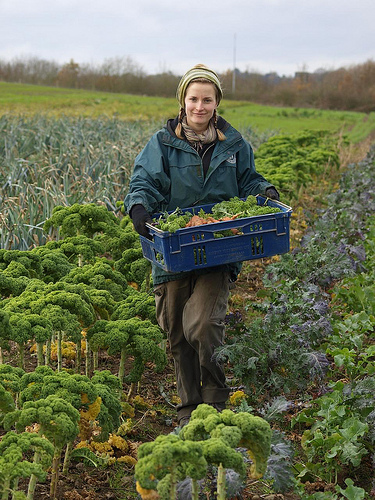
Looking over the barley field (Mark Watson); roadkill pheasant on the Poetry Paper; still from Power of Community; with Dano and Whitney and wild salad, filming for the Journal of Wild Culture; postcard for Great British Beans (Josiah Meldrum); mapping the dish by Elena Judd (Norwich FarmShare) and Gemma Sayers (Transition Ipswich/Oak Tree Low Carbon Farm); cape gooseberries and Tierney, head grower at Norwich FarmShare, among the brassicas (by kind permission of Tony Buckingham, copyright )

Article originally published in the Social Reporting project during a week focussed on Diet and the Envrionment

Monday, 4 July 2011

Come Together Right Now

This month all over England tents are appearing in their thousands across green fields and meadows. If you were a stranger you could be fooled into thinking we had become a nation of refugees, or had broken out into civil war. But then you realise the people are doing something rather more entertaining. We're doing the summer festival thing; escaping from the city and our ordinary routines, picnicking, camping, dressing up, dancing and singing, making merry while the sun shines.

Although Festival-going was once a hip and radical way to gather and listen to music or explore alternative living on the planet, it has now developed into a mainstream pastime. There are festivals and summer camps happening everywhere in the UK: funky, commercial, political, experimental, traditional, Transitional.

And so, during the days leading up to the Transition Conference 2011 in Liverpool, This Low Carbon Life blog crew will be looking at all gatherings great and small this week and asking: are these outdoor pleasuredomes just an excuse for hedonism and a mass distraction from reality? Odd weekends where we can cut the slack, let off collective steam and convince ourselves we are groovy movers-and-shakers really underneath, before returning to our conformist high-tech, high-carbon city lives? Or do they serve a real and essential purpose, providing a meeting place that is not possible within the restrictions of our “normal” social groupings and work places? A glimpse of how life could be if we dropped our collective desire for possessions and mechanical power? Something nearer the earth.

Nearby at the Henham Estate as the security fences for this year’s Latitude Festival are put up by workers bussed in from London it’s easy to be cynical, but last month I went to a convergence that in many ways defines the philosophical and practical art of future living . . .

Tin Village, Sunrise Festival, Bruton, Somerset
The village is constructed the week before: a square of tin-roofed timber-framed buildings set round a no-dig garden and a wood-fired pizza oven. The hand-chopped fuel heats a copper tank that feeds hot water into the field-kitchen. The waste water feeds into the grey-water system constructed from local reeds and iris flowers. Breakfast and lunch is cooked by Jumana on rocket stoves, perpetual chai brewed by George on a camp fire. Even the Transition Network newsletter being edited by Mike today as I arrive is sent on the wire using solar and wind-power. The Village is a travelling model of off-grid living, organised and run by people from all over England (some Transitioners, some who are already living communally on the land), and the purpose behind everything here is a teaching and a skill-share, how to live sustainably, with an eye to powerdown.

You could sit in the workshop spaces of the Village and learn everything you needed to know about downshift: practical stuff about earth ovens, inner stuff to do with change. Mike begins at 7am teaching yoga and ends at midnight showing films about peak oil and living without money, I’m giving a workshop on Social Reporting and Storytelling with Ed (web coordinator for the Network) and working my keep in the field-kitchen, making dough, chopping veg and talking with festival goers who queue up to make their own organic pizzas. It’s hands on, full on, for three days.

Here I am with Cat from Transition Brentford discussing wild edible plants, listening to Philipa on how to make a disinfectant from horsetail and orange peel. Here I am rushing off with a plate of chickpeas for Pete from Tinker’s Bubble who has just found two swarms of bees underneath a car. Here I am talking with Kath (one of the Village’s organisers and also a beekeeper) about the best ways to transport them. Here I am talking with Jumana who made the chickpeas and who used to cook for the Hari Krishna folk in India and Cardboard City in London. And now back again kneading dough: push, pull, fold, feel, let go.

Afterwards I walk around the tents in the two fields, checking out the scene like everyone else. Drink, eat, move, listen, watch. Do things I wouldn’t normally: dance to The Orb, sit naked in a sauna, drink mead, watch the sun go down between the green hills with a hundred other people. The shapes and colours from another England appear like magic: tents like giant hats, blackboards with curly coloured handwriting, girls in wild exuberant costumes, pennants fluttering in the breeze. Wizards talk about the end of the world, circus performers tumble through hoops, a black poet tells a tale about losing his leg, children in dragonfly wings climb a dragon made from ash and willow branches. Crowds roar at bands at several stages. You can cycle to recharge your mobile phone, work for two hours in the Buddhafield cafĂ© and get a free curry, make sour-dough bread or a wood bowl in a forest garden, you can lie in a rainbow faraway garden and rave on till dawn. Boom, boom, wah-wah, the party in fairyland never ends. Or so it seems.

What matters is that we remember we are all workers and that we care about each other, says Theo Simon from Seize the Day in the Green Dome. That’s the sentence that sticks among the millions of words and lyrics floating in the breeze. Hard to remember when there is a pressure to enjoy everything, catch it while it lasts (quick, quick, because in a few days the show will disappear). That’s why it’s important to write stuff down I’m telling the Social Reporting crew on a dry-run for this weekend’s Transition Conference. We have to feedback our experiences and put them into form, so they take root within the fabric, or it could vanish like a midsummer night’s dream. What matters is that we start telling a different story.

What is the story? That’s the key question. The story is what you keep and want to pass on. The story you can tell to a circle of people, or write down because you care. The rest is transience. What remained from Sunrise was the fire, the feeling of being part of a crew that converged and did stuff together. Head, heart and hands knowledge that you can’t get from books. The first two days were hot and beautiful and then on the last day the storm came. The wind howled and shook the tents. I sat with Mike in the children's activities area among a pile of rain-soaked mats and drank coffee gratefully from a tin mug, as the Village crew began to chop wood and light the stoves. Rocket stove, camp fire, earth oven. That’s when you remember what really matters: shelter, warmth, food, company, and most of all warmth.

No fire, no people.

Sunrise camp; George and the Magical Art of Chai Making; Tin Village blackboards; workshop on Design for Sustainable Living with Kieran Vandan Bosch; making pizza; no-dig garden; Jumana making breakfast