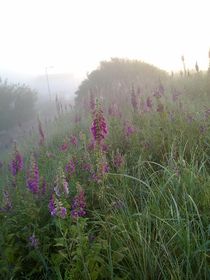
Showing posts with label summer. Show all posts

Friday, 31 August 2012

Ribwort Plantain is Your Friend - Get Your Balls Rolling!

It's the last day of summer, a blue moon and I'm off in an hour or so for the last of the plant medicine 'surgeries' I've been holding at Bungay library community garden every Friday for the past few months. Between 1 and 3pm anyone can come and talk about plants as medicine, share knowledge and tips and visit the plant medicine bed.

These Friday sessions have formed part of Sustainable Bungay's Plants for Life project, which I've been curating this year.

As well as the central bed of the library garden showcasing a variety of medicine plants, the project also includes a monthly talk, walk or workshop on some aspect of plants as medicine. Authors, medical herbalists and biodynamic growers have given readings, shown us how to make great green teas, tinctures and oils and passed on invaluable tips for growing herbs. I have taken several groups on walks around Bungay exploring the medicinal value of the plants we call weeds.

Over the past month I've received so many requests from people asking which plants will help with insect bites and stings that I'd like to share some tips about a fabulous plant - it's common, handsome and grows everywhere. You probably step on it all the time.

When it grows unimpeded by human feet and its flowers shimmer in the light and breeze, you wonder why you never noticed it before. And it is truly a medicine chest.

And although summer is coming to a close, bites and stings will still be a possibility for some time yet, especially for those working on the land or in the garden, so...

Ribwort Plantain is your friend.

Bites and stings of bees, wasps, ants, nettles, mosquitoes, horseflies and fleas are alleviated by rolling a ribwort plantain (Plantago lanceolata) leaf in your hand into a juicy ball, and applying it to the bite/sting.

The leaves of this friendly, common, handsome plant have been giving me a hand all summer and I've been recommending it to everyone.

It really works, often immediately, and is utterly safe. And usually not too far away.

I was stung on the neck by a wasp in a local shop and after making a very unmasculine shriek, I went home, rolled a plantain leaf and applied it to my neck. The pain disappeared immediately and there was no swelling.

So get those balls rolling! And love those plantains!

Note: This piece is adapted from a post I wrote earlier this week, itself an extract from a forthcoming, more extensive post about the plantains. UPDATE October 2013: More of my posts about and including plantain and its marvels can be found here.

Pics: ribwort plantain flowering; ribwort leaves; ribwort flower close-up; rolled ribwort plantain ball (all by Mark Watson)

Sunday, 19 August 2012

ARCHIVE: Plants, Bees and Fascism in the Garden - High Summer Photoblog #1


Every day this week on This Low Carbon Life, one of the crew will be telling a story in photos (and maybe some words!) on the theme of High Summer. As the weather turned wet and windy last week, John joked that we might need a plan B for our theme week. Or was that plan Bee? Everything reminds me of Bees at the moment - as if with Bungay Beehive day next Sunday (where I'm leading a Bee and Flower Walk and also giving a talk about honey as medicine), I need reminding...

Meanwhile back to the photos, and a few words about my letting go of fascism in the garden. I have grown a white-seeded form of sunflower for years now, faithfully collecting the seeds at the end of each season to plant the next Spring. You can see if you click on the picture below that the flower has vibrant gold sepals with a beautiful green-gold centre.

I'd nurture the young plants (probably quite obsessively) and Charlotte would always make sure she was somewhere else when it came to planting them out as I would become inexplicably bad-tempered.

Anyway, this year as usual I planted the seeds, the plants grew and I was alone when it came to planting them out. But what were these flowers that emerged ten days ago - with bronze flames!?! Then I remembered the dark sunflower we had in the garden last year given to us by Rose at the Transition Norwich Plant Swap...

A moment of bewilderment and shock! Then over the next few days a strange sort of relief as I relaxed. I don't have to control everything! The new sunflowers are undeniably beautiful. And it means that the bees have been busy in the garden too. I think I can live with them.

Anyway, it seems I'm not alone when it comes to 'fascism' in the garden. I was telling Becky from Greengrow about my sunflower awakening on Saturday at All Under One Roof, where she had a stall next to Sustainable Bungay's.

"I know, it happens to me in the garden, too. And not particularly anywhere else," she said. "Have you read any Zygmunt Bauman, the Polish sociologist? He talks about the fascist elements of our modern consumerist 'gardening society'."

But enough of fascism. Here are a few more pictures of my low carbon high summer. Here's Charlotte on Saturday holding up the local paper with an article on Bungay Community Bees, featuring our main beekeeper, Elinor, and Elinor herself.


Here I am with Amanda, manager of Bungay library, looking at the Anise Hyssops I brought for the bee bed in the library courtyard garden this year. I talk about them so much that John tells me they are known locally as 'Mark's plant' in Little Melton these days! Amanda says they are very popular with both bees and people.

And last but not least, here is a St. John's Wort being visited by a honeybee in the garden. One of the great native wildflower medicine plants, I had never seen honeybees on it before. But this one clambered over every single flower gathering up the pollen. And yesterday the plant was full of bumblebees.

A few hours later: I just received a request from fellow Transitioner Nick asking if I'd lead the planting of the medicinal plant bed next year in Bungay Library Community Garden. I said yes of course and I'm already excited - by then maybe the fascism will have gone completely! Mark Watson

Pics: Banner of new sunflower, result of non-fascist gardening techniques
; last year's white-seeded sunflower head; new sunflower this year; Charlotte and Elinor at Sustainable Bungay stand at Satuday's All Under One Roof; Talking Anise Hyssop with Amanda at the library; St. John's Wort and honeybee

Sunday, 29 July 2012

FROM THE ARCHIVE: Zero Carbon Holiday

As the holiday season begins, we're republishing a post written about not going away. Two years later the tent (rather more battered!) is up in the garden again and I'm sleeping outside, shelling peas and talking with visitors in its shade. Living by the sea brings the wind and damp, but also social advantages. People love to swing by, and you can go swimming any time you please!

“It’s an attitude,” I explained to Philip in the lane, talking about tents and The Holiday.
“Ah,” said Philip,” Bonnes vacances.

We're not-going on a zero-carbon holiday. We’ve put the tent up in the garden and are taking turns to sleep under the greengage tree, moored in the long grass sprinkled with wild carrot. It’s a good space inside. A mattress, a stool, a wooden box for a table, a candle, a coloured mat, a glass of water. In spaces like these you don’t need much. There is something magical about their containment. Yurt, shed, studio, tree house, den, cabanas with rooves of leaves and a communal kitchen down the hill. Thousands of tent-dwellers are having this experience right now in fields and festivals everywhere in England, as they listen to the wind move around their small shelters like the rigging of a ship, as they step out each morning, bare feet on dewy grass. Fresh air. Sunrise. Mist. Today it feels like everything will be all right.

Half of our diseases are in our heads, and half in our houses.

That’s what Andy told me. He was reading a quote from the writer and wildlife artist, Ernest Thompson Seton who inspired the Woodcraft Folk in 1912. Seton advocated living as much as possible outdoors in tune with the elements. When Andy came down last Friday with Ollie and Antony, we walked along the windy cliff edge and jumped in the rough sea, and then we came home and talked in the tent. The boys played cards and whittled sticks. I made tea. It started to rain, and though there were five of us and it’s only a three person tent, it felt just fine.

That’s what I mean about attitude. Everything gets pared down. You do what is necessary. And that simplicity brings out the best in everyone. You feel connected to the planet and to your fellows. Most of our lives we do what is unnecessary. We work to maintain an empire that creates massively complex earth-damaging, people-damaging systems - systems of technology, systems of commerce, of psychology, of addiction, power struggles. But, like our bodies, what we really need, is neither fancy dishes with extravagant ingredients, nor junk food with a hundred additives, what we hunger for is simple fare. What we long for are picnics and campfires, blackberries and wild greens, sitting under trees, swimming in the river, walking on the earth, sleeping outside with the stars above our heads.

And maybe for the odd weekend, maybe for two weeks of the year, if we are lucky, we get to live this life we were constructed to lead. We call it holiday. But maybe it should be recognised as sanity.

If we could get a taste of that simplicity, that outdoor existence, and value it above everything, our lives would be much happier, We would be less stressed and less conflicted. But we would have to look hard at this indoor life first: these houses and our heads full of complicated nonsense – and find ways to deconstruct them. The houses are demanding and expensive. They suck up energy and time, need constant cleaning and decorating. They are full of machines that need servicing and replacing. Sometimes in our Carbon Conversations a feeling of hopelessness would come into the room. It felt out of our hands. It did our heads in. As if the lifestyle were running our lives, rather than ourselves.

Big house, big head, small world.

Last August Andy and the boys came and put their tent up in the garden and their visit sparked off an idea. Maybe there was a way we could chart this carbon cutting journey we were embarking on together (then called Transition Norwich 2.0) that would treasure all our small independent moves. This Low-Carbon Life was born. My first regular blog post (The Reality Business) in November was written from this tent. Since then, like some of my fellow bloggers, I have completed a year of reducing my carbon emissions by half. Done a cycle of Carbon Conversations. We’ve looked at electricity bills and car logs, swapped stories and useful tips. Now some of us are moving outside: we’ve started to dig gardens, chop firewood, swap vegetables and clothes, organise wholefood co-ops – working to create a culture that is stronger than the allure of the energy-sucking pleasuredome.

Where do we go from here? One thing I’ve realised: this attitude is a good place to start, where life does not feel out of our hands, or hopeless or ignoble, the place the poet calls:

A condition of complete simplicity
Costing not less than everything

We have to start where we feel things are all right. Where we are valued for what we do.

Small tent, large universe.

Andy, Ollie and Mark (and Anthony) playing Go Fish in the Tent (rescued last year from Latitude Recycling point); Sustainable Bungay Summer Picnic; Mark taken by Andy at Covehithe.

Thursday, 19 July 2012

Postcard from a Medicine Bed - Mr Burdock Is Happy to See You Now

On our sister blog at the Transition Network, the Social Reporters are officially on a summer break. As the holiday season arrives, we're kicking back and slipping into a post-when-you like rhythm for the next six weeks. We're sending postcards though - from our events, our gardens, our gatherings in Transition; places we are visiting now, places we have visited in the past, abroad and at home. We'll be posting from the city and the country, from the backyard and the beach, on the road, on two wheels, as we walk, swim, picnic, celebrate and sing. Here is Mark Watson, staying at home, in the company of plants, and one large plant in particular . . .

Dear all,


Every Friday afternoon throughout the summer I've been visiting the Medicine Plant Bed at Bungay library community garden (north-east Suffolk) to see how the plants are doing and holding a 'surgery' where anyone can come along and ask questions or share knowledge about plants as medicine.

I'm curating the bed this year as part of Sustainable Bungay's Plants for Life project, which also includes monthly talks, walks and workshops around the theme of plants as medicine.


I've been meeting up with Richard, who also keeps an eye on the plants and is a fellow lover of wildflowers, and each week we have a conversation that goes something like this:

Me
: Gosh, the burdock's looking amazing Richard. You know it's an awesome blood purifier and helps restore health to the body's systems when they're out of whack. It's called an alterative in herbal medicine. It kind of goes where the body needs it to go. Nick grows Japanese burdock (gobu) and makes a wicked dandelion and burdock beer from it. I reckon you could make the beer out of our native one, too.

Richard
: You know, it will be full of bees when all those flowerbuds open. Oh, look at that honeybee on the herb Robert there. We should probably remove that lower burdock leaf though, it's blocking out the light from the thyme.

Me:
So it is. Could we reposition the leaf just a bit? It's a shame to lose it. That doesn't really work, does it?

Richard:
Not really.

So we talk a bit more and at some point remove the one lower leaf and bring the thyme into the light. That is basically our 'weeding' session. You could call it gardening light.

One of the things that has really struck me with the Plants for Life is becoming aware of just how many different things one type of plant can do. Feed bees. Feed humans. Provide medicine. And probably a lot more that we don't know about.

And all without moving from its home!

Well, if burdock is happy to stay at home for the summer then I am too. And if you're passing through Bungay between 1 and 3 on a Friday afternoon between now and the end of August do come and say hello. You are also welcome to visit at any other time when the library is open.

Mr Burdock will be happy to see you.

with all best wishes for the summer, Mark

Sustainable Bungay, Suffolk, 19 July 2012

Me (l) and Richard Vinton (r) (The One Leaf Revolution) and Mr Burdock with the liberated thyme, July 2012

Thursday, 5 July 2012

Life is Roses... sometimes

This is my first post on the new self-organising This Low Carbon Life. My aim is to publish something each Thursday with the underlying theme of well-being, exploring what this means at a time when as a society we're seeing record levels of anxiety, stress and depression in people of all ages. What can we as groups and individuals do to keep sane and well in the face of mass insecurity and a future of constrained energy and financial resources (at least for a great many of us)?

Some of the posts will be my own and some I'll crosspost from other bloggers exploring the same question.

Here to begin is a story of roses, of connecting with transition in Spain and of spending an afternoon with friends from Dark Mountain Norwich on the best day of the summer so far this year. Oh, and a recipe for a lemon balm and rose herbal refresher.

Just as I was about to publish this post I went into the garden and found a flower on the wild rose outside our door - the first since it seeded itself there several years ago.

And then our first raspberries (another rose family member) appeared today, too.

This year the roses are everywhere abundant and blooming, wild and cultivated, from the briar rose with its apple-scented leaf to the sweet red roses in the hedges in our lane to the bushes in the nearby industrial park.

And talking of roses, on Sunday on the Transition Network Social Reporting Project we published our first post from a non-English speaking country - Roses and Tomatoes (Rosas y Tomates) by Fernando Valdepeñas from Transition Aranjuez in Spain. Fernando's moving account of facing personal and global crises, forming a transition initiative and setting up a Sustainability Centre, and learning to see life in all its colors, is direct and at the same time has great depth. I enjoyed (and related to) the piece more and more as I helped prepare the English translation. If you click the link above you get to the English version (with the original Spanish text following on from it).

One of my favourite things to do in summer is make fresh herbal drinks from plants in the garden. I recently made a summer solstice one with 47 herbs. Our garden is a mix of wild and cultivated with areas left untouched for birds, frogs, snakes, newts and insects and a few beds for vegetables and herbs, so I can put plantain and yarrow leaf in the drinks along with Swiss peppermint and lemon balm.

Yesterday, Kevin, Diana and Jeppe from the Dark Mountain group in Norwich visited us for our July meeting. So it was the perfect opportunity for another herbal refresher. This time I was more restrained with the plants. Having been inspired at the Sustainable Bungay Newsletter production day last week by the fab salad Josiah prepared to go with those fava bean falafels, I based the drink on Rose and Lemon Balm. Here's what I did:

ROSE AND LEMON BALM HERBAL REFRESHER
Makes 1 litre

Bunch of lemon balm
One fragrant rose bloom
Small sprig of lemon verbena
Small sprig of mugwort
One sprig of Swiss peppermint ('Ricola')
Juice of half an orange (I'd run out of lemons)
Dash of grapefruit juice (organic)
Local honey to taste
Fairtrade demarara sugar to taste

- Boil water, let stand for a minute or two. Put lemon balm, rose and mugwort into teapot and pour on water.
- After some minutes add lemon verbena
- Steep about fifteen minutes (I sometimes let it stand longer)
- Strain
- Add the honey, sugar, lemon/orange/grapefruit juice slowly, stirring and tasting until it's just right. Don't overdo the sugar/honey, you want to be able to taste the subtlety of the flowers.

- When cool enough pour into litre bottle, pop in the peppermint, put in fridge and serve later to friends and fellows be they dark mountaineers, transitioners or friendly neighbours.

The drink was a great accompaniment to Diana's polenta bake, Charlotte's hummus made with, you guessed it, great British fava beans (I'm not putting another link there!) and Kevin's salad of broad beans from his garden. And along with the boiled new potatoes from Malcolm, this was a delicious lunch on the first day that has felt like a 'real' summer this year in this place.

Later on we visited the beach and three of us had our first sea swim of the year. The water was warm and the tide was friendly. We revisited plans we'd made earlier in the year for a creative Dark Mountain Norwich/East Anglia 'happening' and discussed the upcoming UNCIVILISATION festival in August, which Jeppe, Charlotte, Kevin and Ava are going to. Get your ticket now whilst stocks last!

Sitting in Kevin's VW campervan in the late afternoon with the marshes behind us, we opened a bottle of Nick's (Sustainable Bungay) homemade raspberry wine, and finished the rest of the birthday cake Gemma made for me at the beginning of May. Two months in the freezer had not diminished any of its dense chocolate intensity and with the local gooseberries from Norman down the lane, it was a delicious dessert.

And the best close to the most relaxed day I've enjoyed in a long time.

Pics: first wild rose outside the back door; roses from the Rosas y Tomates project, Aranjuez Sustainablility Centre, Spain; Rose and Lemon Balm herbal refresher preparation; Dark Mountain in East Anglia in the beach (all by MW except Rosas y Tomates which is by Aranjuez Sustainability Centre)

Friday, 22 June 2012

Because the worlds are round... and wavy

For the Summer Solstice and 24 Hours of Possibility I stayed offline and concentrated on connecting with the living systems of the earth, beginning with a visit to the beach at four in the morning to see the sunrise half an hour later.


It sounds like the simplest thing in the world to just remain offline for twenty four hours. The truth is I can't remember the last time I had an internet-free day. Much of Transition communications is a web-based business. Just the previous day I'd been emailing and tweeting everyone in Sustainable Bungay about Green Drinks that evening and updating a post on the website about it. I went to the Green Dragon with a host of flowers in jars to speak about plant families for the second Plants for Life event in three days.


It was a misty dawn just off the sunrise coast here in Suffolk and I settled for sensing the moment of the sun coming up over the sea rather than seeing it. It can be just as exciting, that moment when you FEEL it and become aware of other senses than the visual at play.

But the coast was clear, the tide was out and the sea was calm! And here's what it looked like a few minutes after the sun rose.


The photograph gives only the merest impression of the stillness and the quiet fullness of everything. No one else was around. The tide was out. The wind was occasional and light. I stilled my thoughts and tuned in with my feet on the ground. Everything felt big and wide and yes, if I had to put it in words, filled with possibility. My body felt relaxed and alert all at once. The sun seemed like a being, something like a person.


Back home

I set about making a midsummer birthday herbal drink for Charlotte to take on her journey to the Transition Tin Village at the Sunrise festival later that day. It was some time before seven, the sun well risen and the whole garden alive and shining with its mix of wild and cultivated plants and bushes. Plant and flower time can be a very different experience from clock time and when I glanced again at the kitchen clock it was way past nine o' clock!


By then I had gathered 47 different plants for the midsummer herbal cocktail, and they were infusing in the teapot. You could smell them throughout the house: a whole array of mints, English and Japanese mugwort, elder, heartsease and marigold flowers, two types of fennel, lovage (one small leaf!), anise hyssop, giant mexican hyssop, lemon balm, salad burnet, southernwood, lemon verbena, two sages, chia, epazote (very small leaf!), lavender, vervain, alecost, plantain, white deadnettle... and twenty-odd more. I added some fresh organic lemon juice and some fruit syrup (we'd run out of honey, which tastes better, but the syrup was okay) et voila!

When I asked Charlotte to guess what plants were in the drink, she named at least twenty five that I hadn't put in along with the ones that were there!

Now it was time for the tortilla, or Spanish omelette, all local eggs, potatoes and onions, Norfolk tomatoes and homegrown parsley, basil and Greek oregano. The birthday, solstice and cross-country journey food and drink were prepared.

So when Simon arrived from Norwich with two friends just after midday to pick Charlotte up for their shared car journey to Somerset, I thought, now I'll do my reconnecting with the living systems.

Then realised I'd been doing it all morning.

One thing that struck me during these 24 screen-free, pixel-free hours of possibility: How wavy the living world is. And how round.


Photos: Summer Solstice Foxgloves at sunrise, Southwold; Talking plant families at Green Drinks, Bungay June 2012; Summer Solstice Sunrise, Southwold June 2012; Garden Shining, June 2012; midsummer birthday 47 herbs for infusion; mostly local Spanish tortilla (all by MW)

Monday, 29 August 2011

Bloggers on the Bench

Saturday 1pm. Last weekend of August, 2011. On a bench in Chapelfield Gardens after our quarterly bloggers' meeting at The Greenhouse cafe. Five Transition Norwich bloggers with The Transition Timeline by Shaun Chamberlin. To be left as part of bookcrossing week on the blog.

Now you see us.

Now you don't.

We didn't leave the book there on Saturday as we couldn't join it to Bookcrossing on the public library computers. And it had started to rain (note end of summer clothing and slightly shivery aspect of assembled company).

None of us writing this week had actually sent a book on its bookcrossing travels (Erik and Simeon are saving theirs for the new bookcrossing zone at Jo Balfe's new cafe The Nectar* on Saturday 24th September). Others were either treasured reference books, lost or from the library.

So to make it clear this is not just a photo op, this copy of the Transition Timeline will be released into the wild of Chapelfield Gardens this month, complete with BCID (Book Crossing identification number) and web address. If you pick it up, do log it in to help keep track of its journey. And happy reading.

Pics: On the bench l to r Chris, Jon, Charlotte, Simeon and Mark in Chapelfield Gardens; Bench and Book; Book and Bench

*The Nectar opens this coming Saturday September 3rd at 10am

Tuesday, 16 August 2011

Cold nights

Over the last week or so, it's been really noticeable that the year is turning. Nights are colder, the wind has a bite to it. The full moon has been hanging low and golden in the sky or swathed in an almost autumnal mist.

The birds that populate my own personal calendar are telling me this too. Swallows are just starting to line up on wires and today I saw my first jay on it's low swooping acorn flight.

Jays are amazing birds. They are bright beautiful crows, with that corvid cleverness. They're here all year round, but in the Autumn they are suddenly everywhere. Flying from oak to oak, they collect as many acorns as they can and cache them.

This, together with their big brassy voice, inspired their scientific name Garrulus glandarius: Chattering, producing acorns.

Each jay can hide between 3000 and 5000 acorns in a year. They play a big part in regenerating oak woodland: each time they forget exactly where they hid the acorn it gets a chance to germinate.

Now I've mentioned them, you'll see they're everywhere. Enjoy them.


Sunday, 14 August 2011

Strim Reaper - Zero Carbon Scything

If you thought that cutting grass was a pretty boring activity, I am here to tell you otherwise. I'm a scyther, scythe teacher and all-round scythe nerd. Cutting grass is my raison d'etre.

Scything, as I am sure you will all know, is a way of cutting grass using a blade attached to a long stick. Think the Grim Reaper but with fescue rather than souls and you're there. Scything is undergoing a revival in Britain at the moment, largely thanks to the importation of lightweight Austrian scythes by Simon Fairlie. Usually I would choose to buy British, but no one in Britain is making scythes at the moment, and the old Anglo-American tools that can be seen in sheds and second-hand shops around the country are cumbersome, heavy and difficult to set up.

In the past, the scythe was used for many things, from harvesting wheat to mowing the churchyard. These days it's a great option for people with small to medium amounts of grass and weeds to manage. It's perfect for orchards and, with a bit of practice you can even mow your lawn with a scythe. One of its main benefits is its silence. There are no engines to disturb the peace of a Sunday morning. The only sound is a gentle swoosh of the blade going through the grass. It's also zero carbon. A scythe is person-powered. The only fuel needed is a midday sandwich.

On a deeper level, for people (like me) who don't have a lot of experience of using tools, the satisfaction of really getting to know a tool, and mapping it in your mind is a profound one. Scything is relatively easy to learn but it does take skill and that is what brings the satisfaction. The first time you cut a clean swathe of grass, get your blade really really sharp is one of great joy. It sounds corny, but it's true. It's a real 'taking of the stabilisers moment'.

So, hang up your strimmer and take to the scythe. You won't regret it..."

Beth Tilston


Postcard from The Scythe Shop; Beth Tilston at work. video (no audio) by Pete Vido of "short scenes demonstrating the versatility of a good scythe in diverse conditions--from "lawn" and field cutting to an "obstacle course" requiring precision mowing technique"; Beth Tilston at work.

Beth Tilston is available to teach scything courses (up to six people) either before the end of October or from May onwards next year. The course requires an area which has access to a reasonable amount of grass which isn't regularly mown short, plus somewhere with nettles, docks, thistles etc to provide variety. Contact bethtilston@googlemail.com or phone 07818474712

Tuesday, 2 August 2011

Sometimes Known as Lughnasa

The alarm went off at 4.30 this morning and I stumbled out of bed.
“It’s cloudy over the sea”, said Charlotte as we looked east from the window to the horizon.
“Is it worth going?” I said.
“We could go up the lane to the oak instead.”

But we always go down to the sea to greet the sun at the beginning of August for the station of the year sometimes known as lughnasa.

So we found ourselves getting dressed and going to the shed for the bikes. The sun would rise at around 5.15 and it’s a good 20 minutes’ cycle ride to get to the sea.

My sturdy old town bike doesn’t go very fast even along straight roads, and this morning I was struggling through the empty streets against the breeze. Charlotte zoomed ahead.

Forgot the bike locks so we propped them against the railings and headed over the dunes. There was a tent on the beach but no sign of anyone apart from ourselves. I collapsed amongst the marram grass and almost immediately the sun appeared - straight out of the sea, red and glowing in a less dramatic, gentler sunrise than last year’s. The whole morning was warmer too. Before I knew it Charlotte had stripped naked (a rare event in Southwold) and raced into the water. Meanwhile I went to visit some nearby wild fennel.

We have some grand fennels in the garden, but for aromatic intensity they are no match for these wild ones. You know how when you rub peppermint and smell it you can feel it in your mouth even without eating it (if you haven’t done that before give it a try). Well, that’s what these fennels are like; just the lightest brush against them with your hand permeates your taste buds somehow. And it feels like it’s cleansing your whole mouth. I never realised I was so permeable before I encountered mint and fennel!

So if you ever come across me brushing lightly against these plants in the wild rest assured I am perfectly sane – come and join me!

Cycling back home we saw a flock of white doves on the common and stopped to collect some fallen wild cherry plums in the lane. The light in the garden was limpid and another sunflower had just emerged. I have a feeling that ALL of the sunflowers I planted this year are going to be the new form I wrote about the week before last. Not that I’m complaining...

Pics: wild fennel sunrise; sea sunrise; me, (new) sunflower, rose - all Aug 2011

Saturday, 23 July 2011

Urban Wild

A photograph. Ordinary. Some bushes, grass, a few flowers scattered round. The ground a bit dry after the hot weather; nothing too spectacular.

But wait. Hold on a moment. Have another look. There, in the centre of the pic - what's that poking its head up above the grass?

Right in the middle of Norwich city centre, mid-week, lunchtime, the traffic humming, shops doing business at a hundred miles an hour, people rushing around. Two foxes, playing in the hot summer sun, rolling in the grass, play-fighting, while the rest of the human world walked by oblivious.

I was spell-bound. I reached, ever-so-slowly for the camera; by the time I got it up to my face, they'd spotted me; one ran for the cover of the bushes, the other stood looking straight at me, just long enough for me to take one snap, then it bounded off. Standing statue-still, a few moments later, it poked its head out and had a cautious sniff of the air, but the moment was gone.

High summer in an invisible city, a single side-step away from our own.

Thursday, 21 July 2011

Waiting for the Heatwave, Living on the Edge

Sometimes I think summer is a state of mind. It pulls you back into memory like no other season: to your picnic childhood, brief summers of love, books set in intense heatwaves on the brink of adulthood, at the end of empire. The past is a different country. They do summers differently there. Even looking back at the photographs of last year everything seems somehow more numinous, more vibrant, more . . . well hot.

High summer is seaside and the people flocking from the cities to sit by the glittering, watery edge of the island. To be unmoored in time, naked to the elements, set free for a moment on this last strip of permissible wildness. It’s cycling down to the dunes in the morning and going for a swim (not today though, it’s raining). So this is a picture from last July when we met Beth from our lane one fine day.

BIG GARDEN But whatever the weather and our fragile happiness that depends on it, the natural world is still out there doing its thing, which in this moment outside the window is expanding in all directions.. Up to midsummer everything shoots skyward in an orderly manner. Then July comes with its big summertime moon, the trees grow dark and shady and the garden becomes huge, resplendent and unruly. I walk about with a pair of shears in my hand and wonder how bushes can turn quite so Amazonian. Here it is at dawn, with some of the local seaside plants - fennel, wild carrot - and surely the biggest buddleia in the world.

INSECTS: Summer is when all the insects arrive. Some are welcome and some are really not. Summer for the black cat (now curled up in the long grass like a small lion in the savanna) is scratching ticks and fleas. For us it's swatting the massive mosquitoes from the marsh and bloodsucking flies known as clegs (maybe should be renamed camerons), avoiding lying in nests of ants, negotiating with the wasp battalions over the greengages. Oh, and aphids . . .

But summer is also the “lawn” full of grasshoppers, the dramatic webs of garden spiders, stag beetles under the logs, the thrilling experience of dragonflies whizzing past your ear on their zig-zag patrols. And it’s sitting beside the buddleia amidst a cloud of butterflies – peacock, scarlet admiral, tortoiseshell, painted ladies - and sometimes those butterflies and dragonflies landing on you. Clocking you with their highly-tuned intelligence. It’s predicted to be the best butterfly summer in 30 years this year, so keep a look out!


BEE PLANTS: All this week I’ve been looking out for flowers in the lanes for our Bungay Beehive Day on Sunday. I’m organising the Plants for Bees stall where we're having a display of the main honeybee plants of the year and a live exhibition of high summer flowers in honey jars. I'm really looking forward to talking with Katherine from the River of Flowers project about planting urban meadows and creating pollination streams.

June is tough for bees in the countryside. Agrochemicals and vergecutters destroy all the “weeds” that once provided them with abundant pollen and nectar. But by July their “hungry gap” is over and there are flowers growing like reckless rebels everywhere they can. Here are some of the ones that are growing by the edge, through the cracks, on the verge of an ecological breakdown. Great mullein on the A146 outside Beccles, viper’s bugloss by Adnams' brewery outside Southwold, St John’s wort on platform 3 at Lowestoft station:

STORING IT UP: Everything is fleeting – childhood, love, the flowers, a summer’s day - and sometimes you just have to take time, even five minutes, to notice the sweet moment as it runs through your living body like a river. Store it up for those long dark winter nights ahead, like fruit in a jar. Like the cherry jam Ed gave me from his tree in Bristol, like the strawberry jam from Malcolm’s smallholding in Darsham, like the whitecurrant jelly from Julia’s garden next door, like the wild cherry-plum pie Nick brought to our Low Carbon Cookbook meeting in Norwich this week and Mark making me laugh on the train going up there.

Here he is in shock response to rising food prices (one of the discussion topics for our Burning Issues chapter), standing with Erik beside Christine’s small city orchard of peach, plum and pear. Smile!

Beth, Jessie and me on Southwold beach; big garden at dawn; scarlet admiral on buddleia in Philip and Irene's meadow; by the great mullein on the A146; by the viper's bugloss outside Adnams' distribution centre; St John's wort on Platform No 3, Lowestoft;
Mark on the train (with banana), edible flowers from the garden; with Erik on Christine's balcony.

Wednesday, 20 July 2011

High Summer - the watery bits

In summer the sun warms the sea
which makes the clouds
that fall as rain and fill the ponds


and waters the plants


that I can eat


No blog is complete without a picture of Mark's Plant !