Showing posts with label winter. Show all posts

Tuesday, 19 March 2013

Wellbeing and the Community - a local perspective

Plants for Life Weeds Walk April 2012What makes up community well-being in a time of financial constraints and climate uncertainty? This was the question twenty five people turned up to explore at Sustainable Bungay's first Green Drinks of the new year at the Green Dragon in January. The evening also marked the start of our new Arts, Culture and Well-being sub-group.

Well-being has been the subject of several recent studies, such as the New Economics Forum's 'Five Ways to Well-being', as well as the focus for many Transition initiatives. We live in a culture based around a market economy, and money and material status (or the lack of it), have become the driving force of most people's lives.

But what real good has this done ourselves or the planet? Apart from living in a badly degraded environment, we are as a collective suffering from ill health, depression, loss of identity and lack of connection to nature and other people. And it doesn't seem to be getting any better.

For many people (including myself) this winter has felt particularly long, dark and cold, with uncharacteristic feelings of gloom and lowness. When I've spoken to people about it, many have said "Oh, it's not just me then." Then there are those colds and fevers which seem to take weeks to clear up. Something is clearly not okay.

What would it mean if our lives, instead of being determined by GDP, were based on our mutual well-being and happiness – not just our personal well-being, but within the communities and neighbourhoods we all share? What would it mean if instead of striving for our own comfort and security, we valued sharing our resources and knowledge? How would our attitudes to each other change, and what kind of changes in the environment would that bring?

Hot Beds & leafy Greens posterMuch of the work Sustainable Bungay has been doing over the last five years has this co-operative learning at its base - from creating the Community Garden at the Library to hosting Happy Monday meals at the Community Centre, to organising bicycle rides, sewing circles, Give and Take Days, Bungay Community Bees and the Pig Club. Several of us attended the recent East Anglian Living Together day about co-ops and intentional communities in East Bergholt, where we found we had over 30 practical skills between us - just in one workshop! As well as sharing these skills, we've learned that working together brings a certain kind of happiness you just can't pay for.

For example, you can go and forage for blackberries on the common on your own, but going out together, sharing a picnic and then taking some to the Abundance table or for a Happy Mondays pudding for others to enjoy, makes for a more open and shared experience. This simple activity has all those five ways in it: connection, action, learning, taking notice and giving. Most of all it involves the place we live in and includes the wild spaces we are surrounded by.

At our Green Drinks we have focused on the many ways we can reconnect, from learning about medicine plants to the restoration of the River Waveney. In January the ideas were flowing, as people paired up and asked each other what community well-being meant to them and what creative or practical skills they had they would like to pass on to others.

kORU FITNESS SESSION POSTERA common thread emerged: well-being meant belonging to a place and not feeling on your own. So plans for a wide range of communal activities were mapped out, from walking and exploring the local countryside, river swimming and canoeing, to sharing skills such as food growing, cooking and meditation. Creative workshops were designed, including storytelling, theatre work and body percussion. What also became clear was that well-being is a major factor underlying and motivating Sustainable Bungay's activities.

Giving ourselves more time and space to connect with people and the neighbourhood was something people thought was vital and in April we'll begin creating a well-being map of Bungay with a walk around town paying particular attention to what the various public spaces in town feel like to be in.

Sustainable Bungay is a busy group. We have always been primarily events-focused and that seems set to continue. But a closer look shows that these events  also often provide the space for people to come together for discussions that might not happen ordinarily.

For our seventh Give and Take Day last Saturday (16th March), Charlotte set up and facilitated a conversation on the Gift Economy – sharing what we have with others in times of austerity. Over twenty people joined in.  Nick spoke about some of the ideas in Charles Eisenstein's Sacred Economics and Jeppe and Vanessa talked about their involvement in setting up the Common Room in Norwich. This project makes unused or underused public spaces (in this case an old church) available as a 'living room for the community', where people can swap and share skills, knowledge and company with no money exchange involved.

Gift Economy discussion at Give and Take DayWhat was striking about this discussion on a cold, dark, Saturday midday in March in Bungay's (slightly dilapidated) Community Centre, surrounded by the Give and Take tables of household goods, clothes and books, and accompanied by a bowl of Josiah's homemade fava bean and winter root veg soup and Christine's freshly baked bread, was that when time was called after 50 minutes, no one was in any hurry to leave. People were still discussing everything from how to receive a gift and should that leave you feeling obliged to give something back in some way, to how to begin to value ourselves and other people, places, skills and the living planet in a way that is not market-driven or utilitarian.

Usually when we think of well-being, it's in terms of personal comfort, and often has medical associations. But what if well-being were really not just a personal matter? What if it also depends on our getting out of our personal enclosures and insistence on everything belonging to some private personal sphere? And into that 'living room for the community' where a conversation can happen about sharing what we have, and we can start to forge different relationships with each other, the places we live in and the planet that gives us life.

"I've never experienced such a discussion before," said one visitor. "I could have stayed much longer."

Images: Plants for Life 2012 weed walk, Bungay; Hot Beds and Leafy Greens poster, March 2013; Koru body percussion poster, March 2013; Gift Economy conversation at SB's 7th Give and Take Day, March 2013

First published on on the Social Reporting project 18th March 2013.

Friday, 10 February 2012

Meanwhile, let's talk about the weather

I've been trying to write a post for some time about perception and change and breaking out of rigid ways of thinking - about how the world is and how people are, and how that relates to transition and the challenges we face on the planet.

But that post is going to have to simmer on the woodburner some more before I post it on the This Low Carbon Life. For those who may be interested, it's coming... tomorrow!

Meanwhile let's talk about the weather.

Do you notice anything unfamiliar in the photo above of North Parade, Southwold? There's the pier in the background, the sea's a bit rough, the sky is cloudy.

Is this an image of the past? The future?

I took this photo last Thursday afternoon, the temperature was just below freezing.

There is NO ONE to be seen. Not a soul. And not one car on this stretch where they are often parked bumper to bumper, and where it's busy even on cold winter days like this. In all the years I've lived here I have never seen this road so empty. And no I have not tampered with the image with Photoshop...

On Sunday five or six inches of snow fell in the lanes and the nearby wood. There was no one about as I walked out just after midday. It was so quiet. And dry. As I walked I became energised and felt close to the planet again.

It was like I had been inside for an aeon - too much Twitter and not enough Winter.

Gemma and Mike were supposed to be coming from Bungay with a couple of young cherry trees later that evening and to stay for some supper, but the temperature dropped and the snowy back roads froze so we put it off for a couple of days...

I've been speaking with Adrienne from Lewes on the phone. She was calling to ask something about twitter, but found it before I'd answered. She asked me if I'd read a recent article about the polar ice melting and causing colder snaps here. Oh yes, the one about the Antarctic, where that huge crack has formed. No, not that one, she said, this was in the Arctic...

Wednesday night Mike and Gemma drove over with the cherry trees. We put the central heating on for two hours, the second time this winter, and lit the woodburner with the dead elm I've been sawing up and writing about.

To our astonishment, they both said it was the warmest they'd been for weeks, even with the heating on. Gemma gets cold feet from standing over long periods of time whilst she's baking cakes for her business. It was lovely for us too. The thermostat (should be renamed friostat in our house) had registered 6 degrees celsius an hour before they arrived.

This is our third winter of severely reduced central heating. The first one was tough. Last year was very cold but our bodies had acclimatised from the previous year. This winter has been warmer but even with the present cold snap we've used the central heating less. Now I think we're the ones who have got tougher. I can't imagine life at 21 degrees at all these days.

I put the ice cream (leftover from a recent shared meal) outside in the frozen snow and we sat down to eat. First a hemp miso soup with freegan tofu, leeks and ginger - really warming. For the main course Charlotte had prepared the African dish Noki, with organic Italian polenta, peanut butter, local butternut squash and garlic, homegrown ring of fire chilli and Malden salt, all mashed up together and eaten with purple sprouting broccoli and organic Italian rice. This was delicious with a grated beetroot and carrot salad and winter salad leaves, all local. We dressed it with balsamic vinegar and Suma sunflower oil.

Afterwards I got the ice cream from outside and we ate it with organic creme fraiche, homemade strawberry jam/compote and braised rhubarb. And enjoyed life at 16 degrees...for the evening.


Pics: Empty Seafront Southwold Feb 2 2012; Snowy Wood Suffolk Feb 5 2012; Sunrise in a cold snap, Feb 2012; Ice Cream in the Snow; Eating with Charlotte, Mike and Gemma (all pics MW)

Tuesday, 7 February 2012

Cold war

When your new girlfriend's 3 children challenge you and her to a snowball fight you have two choices.

Say no, which is the safe option, requires least effort and keeps you warm and dry,or say yes and risk injuring young people who you are still trying to endear yourself to and then getting really wet falling over and breaking a hip.
Despite the obvious points against joining in I couldn't help thinking what fun it looked and a snowball fight has to be one of the most environmentally friendly activities there is. It can be done without travelling, there is no special equipment and when you get back in the house it will feel so warm that you will want to turn down the heating.

I should at this point describe my outfit. This is important if one is going to WIN a snowball fight and yes we did WIN the snowball fight. Me and my girlfriend clearly won based on the fact that we did not have to completely undress when we got in and hang all our clothes on the radiators.

It is important to dress right and as you can see I have a sheepskin trapper hat (from eBay) that completely covers the head and neck. I am also wearing a scarf that I hand knitted from spare wool that I had in the house. The scarf must be tightly wrapped to prevent your opponent from stuffing a ball down your neck. I am also wearing a second hand coat courtesy of my flat mates friend. Unseen in the photograph I am also wearing bamboo leggings from Ethika on Timber Hill, a pair of grinders boots (eBay again) and one of my mum's cardigans.

So there you have it. My guide to the perfect snow ball fight. Oh and don't go behind the shed looking for virgin snow because its a dead end and your only way out is over the compost heap. Just saying. Don't say I didn't warn you....

Tuesday, 3 January 2012

Everything is Material and Everybody Knows

(i)
It's 2nd January 2012 and I'm sawing logs off a big old hawthorn branch which is blocking the footpath. I'm thinking, if anyone asks me what I'm doing I'll tell them I'm clearing the path and sawing some logs for the fire.

But isn't this private land? Well, yes but it's a public footpath and the branch is blocking it. I’m thinking that there’s far too much private land in the world and far too few Commons.

And I'm thinking that I would welcome any kind of conversation, because I'll write about whatever happens tomorrow on the blog. It's all material.

But no one came along the path. I took some photographs. And a bag of firewood home.

(ii)
This plant is probably cow parsley, but I could be mistaken. Common as it is and despite the beauty it brings to the lanes in May, I’ve never paid close attention to it. Umbellifers can be tricky to distinguish and these leaves seem just a bit too dark and shiny. Cow parsley is edible and is also known as wild chervil. I've never eaten it but I shall this year, and get to know it better.


However this plant, which I discovered along the footpath yesterday when we went for a walk (actually it was Lesley who pointed it out - "Is that a plant in flower over there?" she said, as we all turned to see the white blooms glowing in the pre-dusk light), also looks quite like hemlock, which I don't want to eat, fond though I am of it. But it lacks the signature purple spots of hemlock. And doesn’t smell of mice.

Whatever plant it is, one thing I do know. January 1st is not its normal flowering date.

(iii)
Yesterday a neighbour came round and asked me if I'd do her a favour. And handed me a tower of treats. No, really.

"I got it as a Christmas present," she said. "And I'll never get through what's inside it. I’m not quite sure I know what's inside it."

I was delighted and horrified at the same time.

Delighted because I'm a dyed-in-the-wool freegan these days. I love receiving (and giving) gifts, especially of the reskilled, recycled, past the best-before date, handmade, homemade, homegrown or secondhand kind, and I immediately saw all sorts of uses for both the round boxes and the contents: the boxes as seed stores, containers for food or presents. The contents – sweets, biscuits and mince pies - for when children come to visit.

And I like to see my neighbours.


Horrified because of the scandalous packaging. Five strong boxes all glued on top of one another and tied with a ribbon. When I opened them there were a few chocolates in one box, some biscuits and fudge in the others, four mince pies and ALL of the contents fitted into the bottom box. On the base the usual list of industrial food ingredients (including ‘vegetable fats’, read palm oil).

And suddenly I saw this unwanted Xmas gift multiplied to the power of millions. All over the world people giving each other things they don't want or haven’t asked for. Made in factories of precious resources. By people working in appalling conditions on low pay.

How much of this stuff goes to a scavenger neighbour, a charity shop or a Give and Take Day? How much of it ends up in landfill?

What’s it really being made for in the first place?

It was mean inside the tower of treats.

(iv)
“Let’s listen to the Leonard Cohen one,” Charlotte said. Shaun Chamberlin of Dark Optimism had put together an 'album' of fourteen songs he’d chosen at New Year 'all in some way pertinent to the state of the world as we enter 2012.'

"Everybody knows,” growls Cohen in his bass voice that sounds deep even through the tinny built-in speakers on our shared laptop, "That the boat is leaking... and the captain lied."

"Does everybody really know?" I asked Shaun, in an off-the-cuff pun on Twitter.

"I'd say they do, somewhere inside," he said. "But there's a certain logic to ignoring a problem if you can't see any way to change it. That's why sharing practical responses to that nagging, suppressed knowledge can be such a powerful, motivation-unlocking thing."

And I suddenly felt ashamed at my own flippancy.

Everybody knows the deal is rotten
Old Black Joe's still pickin' cotton
For your ribbons and bows
And everybody knows

(v)
Some practical responses to these things:
(iii) Buy nothing year - Adrienne, did you get your ten people?
(iv) Dark Optimism, Transition Social Reporting Project and an article on global meltdown by Guy McPherson

Deep inside everybody knows

Pics: Sawing logs on the footpath; flowering umbellifer Jan 2nd; Charlotte and Lesley in Oak Jan 1st; tower of not so many treats Jan 2 (all by MW)

Sunday, 25 December 2011

Happy Hollydays!

Winter green gifts from the blog storehouse: mistletoe and holly in Suffolk by Charlotte,; solstice tree on Mousehold Heath by helenofnorwich; stored apples by Erik Buitenhuis; woodburner and cat by John Heaser.

Saturday, 24 December 2011

Winter pictures from the river bank

In summer, the countryside is full of colour and there is much to catch the photographer's eye. At the time of the Winter Solstice the days are so short and the weather so cold that it is easy to miss the subtle things that are going on in the natural world. Today our guest blogger is Tamsin, who learnt about Transition from the initiative in Nayland where she lives, and has been out with her camera along the river Stour that runs through the village JH.


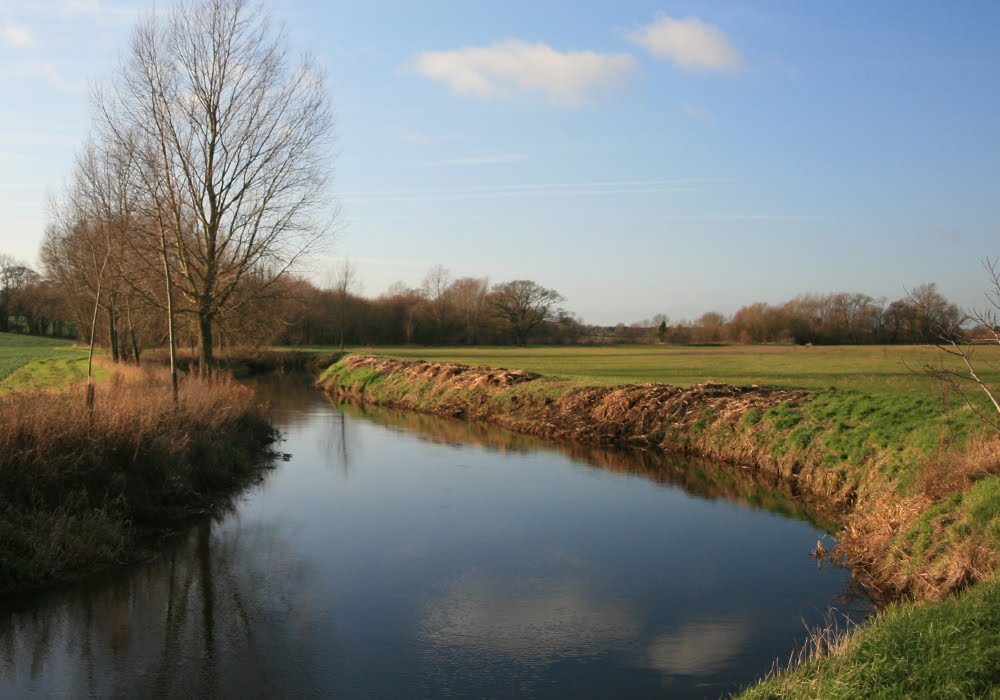
The river in a dormant state. On the bank you can see piles of weeds and bulrushes, recently cleared from the river and left to decay on the banks. It's hard to believe that by summer this stretch of the river will be so full of plants that only a very narrow channel, just wide enough for a canoe, is left.

The leaves have fallen from the trees to return nutrients to the soil and growth all but stops


A teasel seed head. After the seeds have formed in autumn the plant starts to die, but the dried stems and seed heads will still be around all winter

Dead and decaying wood provides a home for a wide variety of saproxylic (deadwood-dependent) organisms including fungi, lichens, invertebrates, mosses and birds


A dead female stag beetle, found earlier in the year and normally kept on my mantlepiece. I've photographed it here on a log, where it would have spent it's larval stage (which may last up to five years) feeding in rotting tree stumps. Sadly, stag beetles are a threatened species, partly due to the loss of dead wood habitats Tamsin Preston

Friday, 23 December 2011

The Winter Solstice: Time To Let Go

Today we have a cross-post that from guest blogger Rachel Lalchan's own ecomonkey blog. The original post was written on Wednesday and has some interesting further information about the physics, history and spirit of the Winter Solstice JH

Whilst our Southern Hemisphere readers are celebrating Summer Solstice, our Sun ends its waning cycle in the Northern Hemisphere today, the shortest day of the year. Winter Solstice heralding the return of lengthening days, falls tomorrow on Thursday 22nd December. From then on, the days will grow longer and brighter until the height of next year's Summer.

Since Stone-Age times (at least), evidence suggests that humans have marked the winter and summer solstice as significant times of the year, the longest and shortest days. For our ancestors, these days were a vital indication of the food growing seasons and the changing of darker days to lighter periods and vice versa.

Today, many of us have lost touch with seasonal changes as our lives seem entrenched in artificial environments immersed in technologies and thought patterns that seem to negate the need for nature. Even where the Earth's provisions are relatively direct, such as for food, clothing and warmth, we tend to either ignore the source of these sustaining goods or take them for granted. How many of us or our children, for example, think and act as though our food and clothes emanate from the supermarket or the high street, rather than from the Earth! Our lifestyles allow us to forget that cotton and food are grown in the soil beneath our feet.

Reversing this conception is easy. It is simply a matter of making time to appreciate what we have. So, when sourcing new clothes, or throwing on a favourite sweater, for example, we can look at the fabric and label, think about where the materials were grown and all the people and elements that played a part in getting the items from soil to us - the sowing, caring, harvesting, designing, producing, transporting, selling and so on. And we can feel grateful. When we eat a meal, we can take a moment to think about how it was grown, who was involved in putting the ingredients together and appreciate all the efforts made by people and elements involved in the sowing, caring, harvesting, storage, transporting, selling, washing, preparing, cooking... Two simple words can change our whole outlook on Life - "Thank You"!


When asked to recall our happiest times, we tend to envision and remember people and places rather than technologies and material things. Breathtaking landscapes, fresh air, open fires, endless oceans, loved ones. These are the things that make us feel alive. Re-Membering our connection to nature and taking time out to acknowledge that we are part of the natural world, gives us the opportunity to grow, to accept the nurturing gifts provided in abundance by the Earth and use them to enhance our well-being.

When we acknowledge the influence of Nature and her seasons on our physical and spiritual well-being, we become aware of the profound links that exist between us, each other and our world. Our connection with the Earth, all its inhabitants, the skies, stars, galaxy and universe beyond run deeper than we can ever wholly know.

The return from dark days into lighter at the Winter Solstice is a chance to look back over the year and see how we have grown, the lessons learned, those we continue to learn, the changes made, what worked well, what worked out differently from how we had imagined at the start of 2011, what made us frustrated, angry and sad, what made us smile, glow and weep with laughter. It is an opportunity to give thanks for the blessings received and the hard lessons learned. It is a chance to look forward to all that we want to be in the coming year and let go of all the things, thoughts, relationships, attitudes, feelings and habits that are holding us back from being who we truly want to be. We can bid farewell to that which no longer serves us.

Racheblue

Thursday, 22 December 2011

Sun, sun, sun here it comes!

Dawn in the Garden. Dead sunflower faces the sunrise, toward the sea down by the compost heap. Ghosts of hogweed and cosmos, wild carrot in threadbare nests, frost-bitten leaves - all the old forms are breaking down, providing mulch for new life.

Out in the lane the jackdaws are flying out to the fields, owls still hooting. Ivy berries now ripe in the bare hedges. A waning moon in the sky. We set out to sit under our neighbourhood oak and wait for the turn . . .

Sun, sun, sun, here it comes! Rising above the oaks and the barley fields on a peerless morning, fresh breeze, curlews calling.

Breaking down old forms Thinking about John's theme for the week on the way home and getting an idea (notice jumping in air!).

Solstice is the moment you let go of what you don't need in order to go forward into the lightness and clarity of the new solar year. Providing mulch from our earthtime and blowing on those sparks for the future all around us.

Pull to climax In the natural world there is a movement known as “the pull to climax”, a condition in which natural systems become complex and symbiotic, interweaving with one another in a web of extrordinary intricacy. The poet and activist, Gary Synder once wrote that in a climax situation, such as a mature oak or rainforest, a high percentage of the energy is not gleaned from the living biomass, but from the recycling of dead matter – dead trees and animals – that lie on the forest floor. This “detritus energy” is liberated from these dead forms by the transformative actions of fungi and insects.

“As climax forest is to biome, and fungus is to the recycling of energy, so ‘enlightened mind’ is to daily ego mind, and art to the recycling of neglected inner potential.”

Transforming old thoughts and feelings, composting our past becomes the life-energy that fuels our present lives. Within the personal life and within the collective, the individual and the creative writer, act like mushrooms. We liberate energy from what is dead and give energy to the living, and thus become symbionts rather than parasites within the collective consciousness of the earth.

Composting the past If you don't let go you don't get any compost for the future, or any fuel. We've been living on borrowed energy for aeons, now we have to find our own. Not just fossil fuel but life force for ourselves. For that we need to key into the living systems, learn to break stuff down - possessions, habits, unnecessary desires - in order to provide ourselves with energy and vigour for the big year ahead. We need to throw new light onto our old organisational structures, into our social and political institutions and question everything.

Are all those antiquated traditions and costumes, those hostile and haughty shows necessary? Are they impeding new ways of doing things? Are they dampening down those collective sparks we see in Transition, in Occupy, in all the dynamic dialogues and ideas that are going on as we move towards 2012? Get some clues from those mushrooms! Get in touch with the ants! Happy Solstice everyone!

Quote from Gary Synder in a talk based on his essay, Poetry, Community and Climax. Photos of moon, sun, tree, flower and fly agaric by CDC and Mark Watson. Ants, Angels and Human Nature, from the blog, Peak Oil Blues by Kathy McMahon.

Wednesday, 21 December 2011

What Moulds, Breaking Down?

Last week I made this beetroot ink. I meant to take a picture of the actual beetroot which was becoming soft and beginning to decompose from the outside. But I didn't so this is the ink itself, which comes out a light purple-red on paper, as you can see on the label:


Now I know this week is a photoblog of winter and decay, but as I was "Cleaning the Downstairs Toilet Window Frame of Mould for the Landlords Inspection" yesterday, some thoughts I'd had for ages and been unable to express started to cohere. So I hope you don't mind John if this post is a decayed mix of photo and poem! The text above in bold is the working title.


I wipe black mold from the window frame
Oil-painted white,
I think of all the plastics.
How will it biodegrade?
Will it 'bio' degrade?
In the end.

We don't know what the planet has in store.
For us. For these things. For us.
How they will go
In the end.

What microbes, what subtle processes,
What break-ups-and-downs,
What surprise detoxifications,
What decompositions

I don't like to say these things
In our marketed world
In our money-mind-dominated world
In our arbitrary world of no consequence

I don't want to offer space for any more excuses
for the comments:
'that's all right then, the planet will come up with
something
to get rid of us, bye-bye humans
ha-ha
just pass me the deeds to those tar sands
as big as ten countries
and let the show go on, and the lights,
and let the land and the people and the plants
go detoxify themselves!'

we don't know what the planet has in store,
what unwritten and undreamt-of-yet procedures
what creativities,
what subtle and invisible armies,
what moulds, breaking down

even if we did
it would be no excuse.


Mark Watson Dec 20 2011


Pics: Beetroot Ink, December 2011, Mould on Window Frame by Mark Watson

Tuesday, 20 December 2011

Life in decay

Maybe our memories are short, but it seems somehow colder this year than last.  It might just be that the awareness of the increased cost of fuel makes the same cold harder to bear.  As I walk around the city, I'm constantly on the lookout for abandoned bits of wood that I can put in the wood-burner.

However, here in my garden there's a small pile of logs that I won't burn, and that I leave alone as wintering homes for bugs, spiders and ladybirds.  The wood's soft to the touch, breaks open easily and inside you can see a fine latice-work of fungus lacing the structure.  Small creatures I can't name scurry and wriggle away when disturbed.

Even with Saturday's dusting of snow, this wood was still a shelter for the life that we don't normally see or think about.  It's a reminder that life flourishes even in decay, even in the "bleak midwinter" of the carol, and how the great cycle of the seasons, and of life, constantly whirls around us.

Monday, 19 December 2011

Winter photo week

This week we are marking the turn of the year with our own pictures.

On Thursday at 5:30 am the sun will be at its furthest distance from the earth and the winter solstice will occur. The sun barely gets above the trees and all life seems to have departed from the earth, even the birds are quiet.

The pond looks dead but a few bubbles in the ice may be from some frogs escaping the cold by staying at the bottom of the pond.

The cold is important for many plants to germinate and to create buds for fruiting next year
Blackcurrant buds forming
 Beech seeds freed from their cases, split by the frost.

Life continues below ground and worms pull the decaying leaves underground in order to eat them
This leaf hangs mysteriously from a spider's thread

But after only 7hours the sun is already going down
 The earliest sunset was on Dec 13th, so the evenings are already getting lighter - however sunrise continues to get later until Jan 1st.