Friday, 7 January 2011

Our National Heritage

Annette sent me a link today that filled me with longing - a site where you can buy your very own piece of woodland. I love trees and forests for all sorts of practical and personal reasons, and I've always wanted to own some. They're not just part of our planet's lungs, but fabulous and beautiful places to get back in touch with nature.

Of course, £40 odd grand isn't that easy to get my hands on so I'll have to put that one on the back burner, as it were.

However, I already own a huge chunk of woodland. In fact, so do you. We all do. Our nation's forests. Which is why I was particularly peeved to find out that our current government is planning to sell off vast areas of state-owned forest to private enterprises, effectively giving the carte blanche do do whatever they like with them, including chopping them down.

Just in case I didn't state my feeling clearly enough: that forest belongs to all of us. And our children, and their children too. I'm not at all happy about it being sold off!

So far, 123472 people have signed the petition on the fabulous 38 degrees campaigning website protesting about the proposed sell-off. Please send the link to anyone you know who you think is likely to sign up.

As I'm unlikely to come up with the £40k needed to buy my own little bit of arboreal heaven, I've just signed up to help the Norwich Community Agriculture group with tree planting on their site on Sunday 30th January. If you'd like to be part of it, check out the Transition Norwich website here. Maybe I'll see you there!

Picture from Guardian Blog site as linked above.

Thursday, 6 January 2011

The World Turned Upside Down

Twelfth Night, the last day of the Christmas season, and a Christian festival traditionally associated with the visit of the Three Kings (or Wise Men or Magi, depending on your preference). But Twelfth Night is also associated with far older, pre-Christian festivals based around the concept of overturning the established order of society - the world turned upside down.

As depicted so well by Shakespeare in the play of the same name, servants would take the role of lords and ladies, apprentices their masters, the fool would become the king.

It got me thinking about what it would mean to be a lord or master today - who are the people in charge? Clearly there's the government, but also the bankers and business leaders - the "captains of industry" - who run vast swathes of the economy and therefore the country.

And while, arguably no-one voted for the current coalition government, at least not in its entirety, we all, to a greater or lesser extent, vote for the bankers and business leaders. How do we do that?

A friend of mine was complaining last year about an article he read about bankers bonuses. "I'm bloody well paying for those bonuses," he reflected bitterly, "I bank with X Bank." My question was obvious: "Well, why are you still with them then? Move your account to a bank that doesn't." But guess what? He didn't.

And the reason was that his original X Bank paid more interest than, let's say, a more ethical alternative. So that's what you get. If you want an extra nought-point something percent interest on your savings, you have to make your choice. If you want a fairer, more equitable society, you have to put your money where your mouth is. I get virtually no interest on my bank account, but I also pay no bankers' bonuses. That doesn't make me a saint or anything, far from it, but there's no point in complaining if you're not going to do anything about it. Your money is the oxygen that fuels the current bonfire of our economy - if you don't like it, cut off the oxygen.

And of course, it's not just bankers' bonuses, though those make an easy target. It's the investments in arms-dealing, dictatorships, tar sand oil extraction, deep water drilling. And it's not, of course, just banks. What about building societies, your ISAs, pension funds. Do you know where they're invested? Imagine if a huge proportion of the population simply switched their money and investments into more ethical, socially minded alternatives. That would truly be a World Turned Upside Down worthy of Twelfth Night. Jon Curran

Wednesday, 5 January 2011

The Housecoat

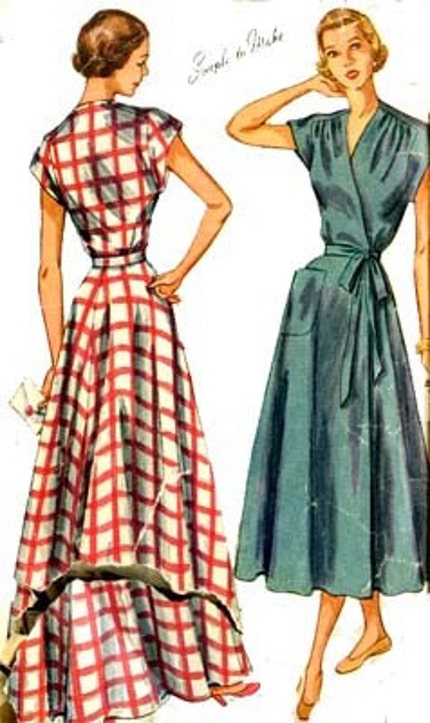
I read The Women's Room by Marilyn French a year or two back and loved it, a wonderful book. But it did puzzle me that all the female characters wore housecoats. I'd never encountered such a thing. The more mid century American books written from a woman's perspective I read, the more housecoats I found. Googling 'housecoat' told me it was just an American word for what we call a dressing gown. But from the books it was clear that women viewed these as normal day wear- something you'd be happy to greet friends in if they visited you. (Just like I do in a dressing gown, to be honest!)

This got me thinking.

Why would you wear a coat in the house? You might if it was cold. Which it might well have been without central heating, especially if you were alone in the house (children at school, husband at work) and not well off enough (or maybe not expected) to heat the house 'just for you'. Remember that one of the points in the 'good wife guide' was to light a fire for when your husband came home.

Clothes used to be much more expensive. They were something to be looked after carefully, mended and patched. A housecoat over the top of your good clothing might well save your clothes from being plucked or snagged. Washing clothing was much harder by hand, and if that housecoat absorbed the spills and smuts of housework, your good clothes might need to be washed less often- and as a bonus, clothing that is washed less often lasts longer.

So, we've found a garment that cuts down on your heating bills, lets you do the laundry less often and helps your clothing last longer. Only in an increasingly energy-profligate society would such a useful item fall by the wayside. Join me in bringing back the housecoat!

I recommend those stylish patterns from the 40's: the modern ones aren't quite so alluring.

Pictures: vintage patterns from Etsy, new housecoat from the telegraph shop!

Tuesday, 4 January 2011

Ye Olde Past

I don't by any means think that all solutions to sustainable living lie in the past. But I have come to suspect that many of them do. The infeasibly high-energy lifestyle we are accustomed to has only been with us for the last few decades, and before that people still did stuff. So it must be possible to do stuff with less energy. The throwaway culture has been with us even less long, and before that people still had stuff. So it must be possible to have stuff without throwing masses of short-life stuff away.

The carrier bag is a wonderful example. It was only invented in 1965, but had completely over-run the world before I was born. Then, around 10 years ago, fashionable people noticed that we live on a fragile planet and decided that (whilst they had every intention of continuing to do far more harmful things) it would be very easy to make enormous amounts of fuss about carrier bags and thus appear terribly green. I don't want to sound like a defender of carrier bags- it's a bit stupid to use disposable bags made from oil every day, and I try fairly hard to avoid them. Any way, fashionable people everywhere suddenly needed to be able to carry things without plastic bags. I don't know if they all did the sensible thing and asked their mums or whether they experimented with slings made from tree bark for a bit first- but 10 years on and we're all using various sizes and shapes of fabric bags for our shopping. Just like my mum does. And her mum did. In fact, my mum still uses the fabric bags her mum made from offcuts. (Incidentally, this used to embarrass me horribly as a stroppy teenager, mum with her patchwork bags and dad with a tatty old rucksack. “Why can't you just USE CARRIER BAGS like NORMAL PEOPLE?” I thought, miserably. “Why all this palaver with the bags? Shops just hand out NORMAL BAGS for FREE.”)

So, what other wonderful olde-worlde low-tech rediscoveries can I dig out? I've already bored you all rigid (or possibly disgusted you) with tales of my hankies, so I will have to find others to delight you with this time.

Sadly, it's not all as simple as the plastic bag conundrum. Well, it is simple, it's just not always desirable. How did people cope without central heating? They were cold. How did people cope without ready meals? Women worked inside their homes and not out of them, enabling them to cook meals that took a long time. How did people cope without a car of their own? They didn't go as far and it took longer to get there.

I think there are answers to be found though, and it will take careful sifting to find them. We need to use less energy more cleverly, and ways of doing that are there to be found. Some of them are hidden in the future and some in the past.

We need to avoid the twin traps of seeing the past as some dreadful brown soup of drudge and misery or a perfect rosy agrarian past, all pigs and sixpences.


Tomorrow, I discover the housecoat...

Pics: Carrier bags and Housewife used under creative commons licence from Wikipedia - do be sure to click on the housewife picture to experience it in full; hankies my own.

Sunday, 2 January 2011

Can Norfolk stop the ‘Dash for Ash’?

This blog is dedicated to the memory of Norwich environmental campaigner, Sue Pollard, who died last month. Sue was dedicated to many causes: she always fought for human scale, local environmental solutions, and against large scale technofixes such as biofuels and waste incineration.

The Independent reported last week that up to 24 incinerator schemes are in UK planning: a ‘dash for ash’ facing widespread opposition.

People in Norfolk are all too familiar with this. Back in 2006, an incinerator was proposed by Norfolk County Council on the outskirts of Norwich – upwind of the city. Although a land ownership technicality saw the end of this proposal after the loss of several million pounds of taxpayer’s money, it would have never been accepted following a fierce local campaign.

However, Norfolk County Council always planned an even bigger waste processing facility – the incinerator now being proposed upwind of Kings Lynn that could burn a quarter of million of tonnes of waste each year.

(photo: mock-up of 80m incinerator flue tower when placed alongside Norwich Cathedral)

The cause of this surge of nationally planned incineration plants lies with DEFRA more than local councils. For a decade, national government has been unambitious in pushing the zero waste policies that would favour recycling and reuse, and has failed completely to set stronger rules on packaging to prevent waste at source. At the same time, they have offered Private Finance Initiative (PFI) credits for councils to go for large scale, hi tech waste projects, effectively opening up UK plc to large multinational waste companies as in Norfolk.

A key factor here that swung things in favour of the incinerator has been the Council’s gaining over Private Finance Initiative (PFI) credits worth over £150m by 2040. Although, these PFI credits were offered for a ‘technology neutral’ waste solution, incineration has been favoured by government and companies. Local government, with the few exceptions of those councils who have adopted zero waste strategies, has looked for the easiest options to meet the EU’s Landfill Directive that seeks to eliminate landfill. There was an inevitability that an incineration proposal would win in the end following what in essence is a bribe from national government.

However, Norfolk could have “done different” if there had been the right vision ten years ago when strong EU legislation on reducing landfill first loomed. At this stage, the Council should have created a Zero Waste strategy and started a very strong drive to push up recycling rates. Zero Waste would mean encouraging reclamation and re-use of materials, as well as recycling. This would have helped establish Green sector business and jobs too: yet, there have been innovative proposals for reclamation parks that sadly have not been taken up in Norfolk.

With slow uptake of recycling, the Council already has a shortfall in waste treatment facilities and is proposing to export waste to Kent for incineration from next year. If Norfolk had gone for Zero Waste, yes, there would still be residual waste, but much less. The question would still be what to do with it, but it would be a smaller problem.

The choice has been misrepresented by those behind the Kings Lynn incinerator as between ONLY landfill or incineration. However, since 2005, I and others have proposed that a network of treatment sites were implemented across the County instead of one large, humongous plant. These could have been medium scale for example, each processing between 10,000 and 40,000 tonnes a year of the food and organic waste that is responsible for the climate damaging methane emissions from landfill. They could have been developed incrementally, brought considerable employment and based around more environmentally friendly technologies such as Anaerobic Digestion. This is another form of good, old fashioned composting, and, of course, that should be strongly promoted too.

Such a localised network would also save a lot of transporting rubbish around that a large plant at Kings Lynn will generate. The treatment sites would have been much more local and also encouraged people to recycle more. If you see your rubbish being processed close to you, you are much more likely to care about recycling more.

The drive to push up recycling in Norfolk has been pedestrian – though it has improved in recent years - and momentum has been lost as the Council has looked only to incineration as the way to deal with the problem. Rather than really push up recycling, reclamation and reuse, the Council has taken the lazy option – ‘we can solve the problem with one big bang of technology’ – whilst large, waste companies benefit from a £10bn plus industry.

So now the people of Kings Lynn are faced with an incinerator upwind of their town. The Council and the preferred incineration company are now undertaking a publicity drive on how this shouldn’t be seen as a threat to their health and livelihoods.

(Photo: Anti-incinerator protest in Downham Market, first published by EDP)

However, most people when faced with an industrial scale plant on their doorstep – quite rightly feel fear. There’s enough evidence from other plants of breaches in regulations for people to be fearful of a large industrial incinerator on their doorstep. They have the support of the local MP too.

The safety of this plant has not been demonstrated: the jury is still out - particularly in the area of the PM2.5s and PM10 particulates. These are produced by any burning process: the PM2.5’s of size 2.5microns and below have the capacity to cross the blood/air barrier in the lungs and thus enter the bloodstream and the internal organs. Incinerator emissions including dioxins, heavy metals and the particulates all originate from a single point source. This concentrates them much more for the immediate local area – housing and agricultural land could be adversely affected.

A recent parliamentary question on carbon emissions associated with UK incinerators indicated that they produce 2.5m tonnes of CO2 equivalents annually – around 0.5% of the national total. This will grow significantly if the ‘dash to ash’ happens creating more long term emissions than the methane landfill emissions it is supposed to prevent as carbon dioxide(half-life 100 years) hangs around much longer than methane (half-life 10 years) in the atmosphere.

There’s another aspect of this proposal that is sad. The Council has created a divisive issue. Rather than getting everybody behind moving to a Zero Waste culture, and encouraging responsibility, after 10 years of prevarication, we see a deeply contentious scheme that is going to continue to create division through consultations and planning. In moving a project that was deeply unpopular in Norwich to Kings Lynn, the Council hasn’t learnt the lessons from the large expression of public feeling demonstrated against incineration in Norwich.

This is what I think Norfolk County Council should do - abandon this single industrial scale solution and to urgently rethink policy.

The Council should start by establishing a Zero Waste policy and building on the success of small to medium scale Anaerobic Digestion waste plants already happening in Norfolk. Build on the food waste schemes happening in Norwich and elsewhere. They should be developing plans with providers who have been ‘roaring to go’ for years on creating reclamation and re-use schemes – we should create several of these sites across Norfolk. We should be aiming on achieving a recycling rate of 70% within a couple of years, and achieving higher than that over the rest of the decade. In complement, Norfolk should be aiming for residual household waste to come down under the 6 figure tonnage by mid decade and below 50,000 by end of the decade.

Then we wouldn’t need an incinerator burning a quarter of a million tonnes of waste up to 2040. This would be true ‘sustainable development’ and we would have created a good few jobs along the way rather than the few in this proposed large scale plant.

In the lack of a clear Zero Waste policy and the lack of concrete and undisputed evidence that there are no health risks associated, we must try to prevent incineration coming to Norfolk and work for Zero Waste methods across the UK. See these links for more details of campaigns against incineration http://www.farmerscampaign.org/ , http://ukwin.org.uk/.

I had intended to make a speech, based on content similar to the above, at the Norfolk County Council Environment, Transport and Development committee on November 2nd 2010 when it was deciding the incinerator contract: along with another councillor, I was prevented from doing so by the Committee chairman.

Andrew Boswell

Saturday, 1 January 2011

Happy New Year everyone!

Well, as Mark said, the darkness around us is pretty deep. We live down a lane with no street lights, so when we lean out of the window at midnight this is what we see. Only at New Year the horizon is full of exploding coloured stars as all the big parties in Southwold let off their fireworks and the church bells let rip across the fields. Unfortunately the pictures didn't quite work out. So you've got a pic of shiny snowflakes and the moon from another night. You will have to imagine the sound effects too and ourselves leaning out on this almost-warm night. Oh and the cat (who is purring and also black). Mysterious stuff darkness. Never know what you might find out there. Happy New Year everyone!
Charlotte and Mark

We weren't at home for New Year's Eve so were able to enjoy a real log fire right up until midnight! There were plenty of fireworks outside, though because of the general fogginess we could hear them rather than see them. And the fire reminded me to add one more aspiration to my list - get our own woodburner working in 2011!
Jon Curran

Friday, 31 December 2010

Changing the Frequency

In one of the last entries for 2010 on Transition Culture Rob Hopkins posts his interview with Christopher Alexander, a discussion of the links between A Pattern Language and the new Transition ingredients. At some point the architect and writer's wife, Maggie enters the conversation:

"If Transition was successful, what the community would feel - it would feel like home. Simple. Everyone can feel that feeling. You know it when you see it; it just feels like home. You walk down the street and somebody’s planted nut trees and they’re excited to tell you about all the nut trees they’ve planted . . . And how it can replace wheat or what it was you said. They’re excited because they’re making their home – that’s what it looks like!"

I’ve done a lot of giving up in my life - pleasures, habits and physical possessions. First when I went on the road in 1991, then when I joined the Transition movement in 2o08. So when people talk about giving up our materialist, greedy lifestyle, I know what they mean. Because I’ve done it. But it’s how we proceed, how we engage with life that’s really important. Sure you can cut your carbon emissions by half the national average, as some of us in Transition Norwich did last year, but can you still love the world? Can you make a place feel like home? Can you make Transition feel like home?

Alexander’s grammar of vernacular buildings speaks to us because our desire to belong goes deep. It’s an unspoken and unsatisfied force within us. We’ve come from a deracinated culture, deliberately alienated and set against one another in order that we aspire to the shiny, sugary, power-driven heavens manufactured by the empires of the world. But these are chimeras. We work hard to live in houses, but they don’t always make us feel at home. To belong is to become embedded in the living, dancing fabric of the earth. In all its colour and warmth, harmony and beauty.

When the writer Bruce Chatwin walked across the desert to the the ancient city of Persepolis, he noticed his nomad guide took no notice of the ceremonial tents erected by the modern rulers of Iran, as they passed by. When they arrive at the ruined city, Chatwin gazes at the megalomaniac inscriptions of its former tyrant-king: I fought, I slew, I conquered.

“Again I tried to get the Quashgai boy to look. Again he shrugged. Persepolis might be made of matchsticks for all he knew or cared – and so we went up into the mountains.”

Why did the young man not care about the city? Because the city was not in him. To live as a nomad, as a free man, to go home at the end of a long road, means you live by different laws. It means you follow a track, a songline, invisible to the naked eye.

The patterns that hold us happily within the fabric of the natural world are not mind-made or mechanistic. Don’t let Transition get mechanistic, cautions Alexander.

Don't imagine that science will save bees, only a change in our lifestyle will save the bees, declares Heidi Hermann.

I’m at the Bee Summit in London in December and the queen bee of the Natural Beekeeping Trust is laying down the law that science for all its cleverness cannot see. The honeybee lives within the sun-ordered rainbow-coloured frequency of the earth, absolutely in tune with her environment. Without the honeybee workers, 90 per cent of our crop species don’t get pollinated. The lawyers, politicians and official institutions are insisting that only when the scientific data is correctly submitted will Britain consider banning the neonicotinoid pesticides that are causing losses within bee colonies everywhere (the British Beekeepers Association has until recently received thousands of pounds to endorse the pharmaceutical companies that make them). But this is 2010 - a year in which the number of hives in Britain doubled - and this is a room full of beekeepers in a city one third of which is made of people’s flowering backgardens. Beekeepers from Highgate Cemetery, the Royal Parks, The Tate Gallery, Chelsea Physic Garden. A great murmuring has started up amongst us. The upholders of the mechanistic world get stung by intelligent questions from the floor. Heidi gets a standing ovation.

The world doesn’t change because you change your behavior. But because you let go. When you let go of habits and things you realise you have been living within a certain configuration, a certain frequency that keeps you trapped in an artificial empire. I came. I slew. I conquered. When bees are affected by systemic pesticides they lose their ability to orientate themselves according to the sun and find their way back to the hive. In their dramatic disappearances bees have been telling us something, and in spite of our acquisitiveness, our chemical dependencies, our arrogant left-brain thinking, we’ve begun to respond. From somewhere we had long forgotten about.

There is a shift out there and sometimes you can feel it. No amount of media control, of distraction, of police brutality can cover it up. You can’t legislate against it. Because it’s invisible and intangible, something you can’t see with the naked eye. It’s a collective human feeling, in synch with all the living beings on the planet. A frequency that happens when people start to link up, share their stores, their sweetness, tune back in, start acting like bees in each others' interests. And that’s a feeling you can’t stop. And that’s the feeling I intend to take with me into the new year. 2011. A year when millions of us start coming home.

Abandoned house in Detroit (www.sweet-juniper.com/2009/07/feral-houses.html; shut-up houses in Coleman Road, Norwich www.oneworldcolumn.org); beehive in snow from National Beekeeping Trust . Rosebay Willowherb from Plants for Bees project, Bungay Community Bees by Mark Watson. Quotation from The Songlines by Bruce Chatwin.